Every road expansion, apartment project, warehouse, school building, shopping complex, and village house construction in India depends on one thing — building materials. Among them, cement blocks have become one of the most widely used products in modern construction because they are faster to install, cost-effective, durable, and suitable for large-scale projects.
A few decades ago, traditional red bricks dominated most Indian construction sites. Today, the situation is changing rapidly. Builders, contractors, and developers increasingly prefer concrete cement blocks, fly ash bricks, AAC blocks, and hollow blocks because they reduce construction time and improve structural efficiency.
At the same time, India’s urbanisation, infrastructure expansion, highway projects, smart cities, industrial growth, and housing demand continue creating massive demand for construction materials every year.
This has turned cement block manufacturing into one of India’s strongest small-to-medium-scale industrial business opportunities.
Unlike trend-based businesses that depend heavily on changing consumer behaviour, cement block manufacturing is tied directly to construction activity — one of the country’s most consistent long-term sectors.
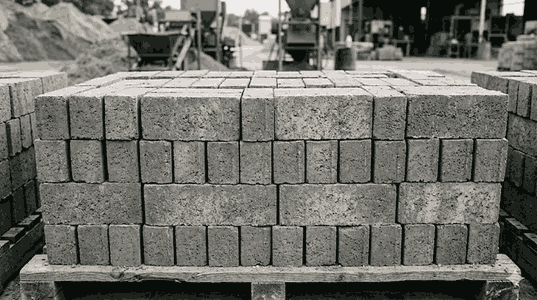
A Business Connected to India’s Construction Boom
India’s infrastructure and housing industries continue expanding at a massive scale.
Several factors continue driving demand:
- Rapid urbanisation
- Growth of residential housing projects
- Government infrastructure spending
- Expansion of industrial construction
- Increasing use of modern building materials
- Rising demand for affordable housing
Construction activity naturally creates recurring demand for cement blocks across both urban and rural markets.
Types of Cement Block Manufacturing Businesses
Solid Cement Block Manufacturing
Used widely in standard wall construction.
Hollow Block Manufacturing
Popular for lightweight and cost-efficient structures.
Fly Ash Brick Manufacturing
Eco-friendly construction material segment.
AAC Block Manufacturing
Lightweight premium construction blocks with insulation benefits.
Interlocking Paver Block Manufacturing
Used in roads, pathways, parking spaces, and landscaping.
Customized Construction Block Manufacturing
Specialized blocks for industrial and commercial projects.
Investment Required: Moderate to High
The investment depends heavily on production scale and automation level.
A small cement block manufacturing setup may require ₹10–25 lakh including:
- Block-making machines
- Mixers and molds
- Cement and raw material stock
- Land or shed setup
- Labour and transportation arrangements
A medium-scale automated manufacturing unit may require ₹50 lakh–₹5 crore or more depending on machinery and production capacity.
Land availability and logistics play a major role in this business.
Raw Materials Used
Common raw materials include:
- Cement
- Sand
- Fly ash
- Stone dust
- Aggregates
- Water
- Chemical additives
Raw material quality directly affects block strength and durability.
Revenue and Profit Potential
Cement block manufacturing can become highly profitable because construction demand often operates at large scale.
Revenue sources may include:
- Direct supply to contractors
- Builder and developer contracts
- Government construction projects
- Retail construction material supply
- Infrastructure project orders
- Customized block manufacturing
For example:
- Large builders often place bulk recurring orders.
- Interlocking paver blocks usually provide strong margins.
- Fly ash and eco-friendly products are seeing rising demand.
A well-managed cement block manufacturing unit can generate substantial monthly revenue. Net profit margins generally range between 15–30% depending on production efficiency, raw material costs, and transportation management.
Businesses with strong contractor networks often perform especially well.
What Makes This Business Successful
Product Strength and Quality
Builders care heavily about durability and consistency.
Efficient Production Capacity
Construction projects often require bulk delivery within tight timelines.
Strong Contractor Relationships
Repeat builder and developer clients create stable business flow.
Transportation and Logistics
Delivery efficiency affects profitability significantly.
Competitive Pricing
Construction markets remain highly price-sensitive.
Challenges to Prepare For
Heavy Competition
Local block manufacturers compete aggressively on pricing.
Transportation Costs
Blocks are heavy, making logistics expensive.
Raw Material Price Fluctuation
Cement and aggregate prices may rise unpredictably.
Seasonal Construction Slowdowns
Monsoon periods can sometimes reduce construction activity.
Space Requirement
Manufacturing and curing processes require sufficient land area.
Manufacturers who maintain consistent quality and delivery reliability usually survive competition much better.
How to Increase Profitability
Build Direct Builder Partnerships
Contractor relationships create recurring bulk orders.
Add Multiple Product Categories
Paver blocks and fly ash bricks improve market reach.
Focus on Fast Delivery
Construction sites value reliable supply timing heavily.
Invest in Semi-Automation
Improved production speed increases profitability.
Expand Into Government and Infrastructure Projects
Public-sector construction creates large-volume opportunities.
Cement Block Manufacturing vs Traditional Brick Business
Traditional clay brick manufacturing often depends heavily on seasonal kilns and manual labour. Cement block manufacturing is generally more mechanized and aligned with modern construction trends.
Cement blocks also offer advantages like uniform size, faster installation, and lower construction time.
However, transportation and machinery investment are typically higher compared to small traditional brick setups.
The Future of Cement Block Manufacturing in India
The future remains extremely strong. India’s housing demand, smart city development, industrial expansion, and infrastructure spending continue growing rapidly.
At the same time, builders increasingly prefer efficient and standardized construction materials that improve speed and structural quality.
Eco-friendly products like fly ash blocks and energy-efficient construction materials are also likely to gain more importance in coming years.
The Verdict
Cement block manufacturing is not a flashy or trend-based business. It is a practical industrial business tied directly to one of India’s largest economic sectors — construction.
Entrepreneurs who maintain product quality, efficient production, strong builder relationships, and reliable delivery systems often build highly stable manufacturing businesses with long-term demand.
In a country where homes, apartments, factories, roads, and commercial buildings continue rising every year, cement blocks are likely to remain one of India’s most essential construction products for decades ahead.
Frequently Asked Questions (FAQs)
Q1. Which cement block category is most in demand today?
Hollow blocks, fly ash bricks, AAC blocks, and interlocking paver blocks are seeing especially strong demand in modern construction projects.
Q2. Why are builders shifting from traditional bricks to cement blocks?
Because cement blocks often reduce construction time, improve uniformity, and provide better structural efficiency.
Q3. Is land important for starting this business?
Yes. Manufacturing, curing, storage, and transportation operations require sufficient open space.
Q4. What is the biggest challenge in this business?
Transportation costs and heavy local pricing competition are among the biggest challenges.
Q5. Can small cement block manufacturers compete with larger factories?
Absolutely. Many smaller manufacturers succeed through local contractor relationships and faster delivery service.
Q6. Is this business affected by seasonal construction slowdown?
Sometimes yes, especially during heavy monsoon periods when construction activity may temporarily slow down in certain regions.