India does not just love music — it breathes it. From the devotional bhajans that wake a village at dawn to the pulsating beats of a Bollywood chart-topper blasting through a Metro train, music is the emotional currency of this nation. It plays at weddings, funerals, festivals, cricket victories, and temple processions. It sells cars, perfumes, and political campaigns. And behind every piece of music that moves a billion people, there is a studio — a room full of microphones, monitors, and magic — where sound is shaped into something that lasts.
The music production studio business in India is no longer the exclusive domain of Mumbai’s legendary recording halls or Chennai’s film music empires. A new wave of independent studios is rising across the country — in Bengaluru’s indie scene, Hyderabad’s film industry, and dozens of Tier-2 cities where talent has long existed but professional infrastructure has not. The demand for quality audio production has never been broader, and the business opportunity has never been more real.
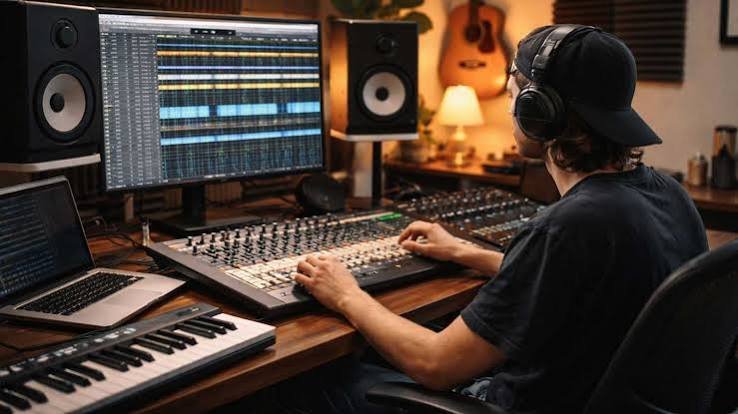
The Market: Far Bigger Than Just Bollywood
Most people associate music production with film songs and playback singers. That is just one slice of a much larger pie.
India’s music industry is valued at over ₹1,500 crore and growing at 15% annually, driven by streaming platforms, digital content, podcasts, and a booming independent music scene. JioSaavn, Spotify, and YouTube Music have created thousands of new independent artists willing to pay for professional studio time.
Beyond music, studios serve voiceover artists, podcasters, advertising agencies, YouTube creators, and e-learning companies — all needing professional audio. This diversified client base is what makes the studio business genuinely resilient.
Business Models: Multiple Revenue Streams Under One Roof
Studio Rental by the Hour — Artists book by the hour or day. Predictable, recurring revenue with minimal per-session effort.
Full Production Services — End-to-end recording, mixing, mastering, and arrangement. Higher per-project revenue with opportunity for long-term artist relationships.
Voiceover and Podcast Recording — Ad agencies and content creators need clean professional audio. This segment pays well, books regularly, and needs no musical expertise to serve.
Investment Required
Setting up a professional music production studio requires meaningful investment in acoustics and equipment — but the range is wide enough to suit multiple budget levels.
A home or project studio for independent producers and voiceover work can be set up for ₹3–8 lakh, covering acoustic treatment, a DAW, audio interface, monitors, and microphones.
A professional mid-range studio with a dedicated live room, control room, proper acoustics, and quality microphones requires ₹15–35 lakh — the sweet spot for serious commercial operations.
Revenue and Profit Potential
Studio rental rates in Indian cities range from ₹800–1,500 per hour for mid-range studios to ₹3,000–8,000 per hour for premium professional spaces. A mid-range studio booked for 6–8 hours daily at ₹1,200 per hour generates ₹7,200–9,600 per day — translating to monthly revenues of ₹1.5–2.5 lakh from rental alone.
Add production project fees — a full song production can command ₹25,000–2 lakh — and monthly revenues of ₹3–6 lakh become achievable for a well-utilised studio.
Net profit margins run between 30–45% after rent, electricity, equipment EMIs, and staff. Studios that own their space enjoy dramatically stronger long-term margins.
What Drives Profitability
Diversified Client Base: Studios that serve musicians, podcasters, voice artists, ad agencies, and content creators maintain high utilisation across all days and hours. Over-dependence on a single client type creates revenue gaps during slow music seasons.
Reputation and Sound Quality: Your work is your portfolio. Every exceptional track becomes a calling card. Artists talk — great experiences generate referrals faster than any advertising.
Challenges to Navigate
High Initial Equipment Cost: Quality audio equipment is expensive and depreciates. Budgeting for periodic upgrades and maintenance is essential to stay competitive.
Utilisation: Studios cycle between packed weekends and quiet midweek days. A diverse client portfolio that fills weekday slots is critical for consistent profitability.
Home Studio Competition: Affordable technology has made home studios viable for many artists. Commercial studios must justify their premium through superior acoustics, equipment, and post-production services home setups cannot replicate.
The Verdict: Profitable for the Passionate and the Professional
A music production studio in India is profitable when run as a business, not just a passion project. Growing digital content demand, a rising indie music scene, and expanding corporate audio needs create multiple revenue streams for a well-managed studio.
India’s appetite for great sound is only growing. Be the place where that sound is made.
Frequently Asked Questions (FAQs)
Q1. How much does it cost to set up a music studio in India?
A basic project studio starts at ₹3–8 lakh. A professional mid-range studio requires ₹15–35 lakh. Premium setups cost ₹50 lakh and above.
Q2. How much can a studio earn monthly?
A mid-range studio with consistent bookings generates ₹3–6 lakh monthly through rentals, production projects, and voiceover sessions. Premium studios with industry connections earn significantly more.
Q3. Do I need formal music training?
Not necessarily. Many successful studio owners hire skilled engineers and producers. A working knowledge of production helps with client communication and quality control.
Q4. What are the most profitable services?
Full song production — recording, mixing, and mastering — offers the highest per-project revenue. Corporate jingles and web series background scores command premium rates. Voiceover and podcast recording are consistent, lower-effort revenue streams.
Q5. Is a music studio viable in Tier-2 cities?
Absolutely. Cities like Hyderabad, Bengaluru, Pune, Bhubaneswar, and Indore have growing pools of artists, content creators, and corporate clients who need professional studio access. Early movers in underserved markets build loyal bases quickly.
Q6. What is the biggest mistake new studio owners make?
Over-investing in equipment before building clients. A modestly equipped studio with full bookings beats a world-class facility sitting empty. Build the clientele first, then upgrade gear as revenue grows.
Great music needs a great room to be born in — build that room, and artists will always find their way to your door.