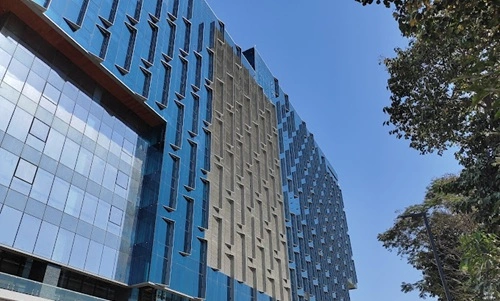
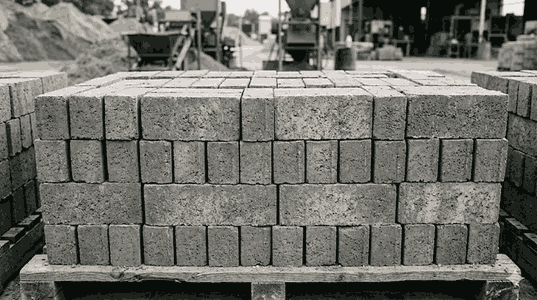
India is in the middle of one of the largest construction booms in human history. Millions of homes, highways, hospitals, schools, and commercial buildings are going up across the country every year — and every single one of them needs bricks. Traditional red clay bricks have long dominated this demand, but a cleaner, stronger, and government-mandated alternative is rapidly taking their place: fly ash bricks. For entrepreneurs looking at manufacturing businesses with strong fundamentals and genuine long-term demand, fly ash brick production is one of the most compelling opportunities available today.
The Market: Mandated by Policy, Driven by Construction
Fly ash is the fine powder residue generated by coal-fired thermal power plants. India produces over 200 million tonnes of fly ash annually — one of the largest volumes in the world. For decades this was a waste disposal problem. Today it is a raw material opportunity.
The government has made fly ash utilisation mandatory — power plants must supply it free within a certain radius, and nearby construction projects must use fly ash products. This effectively creates near-zero-cost raw material supply and mandated product demand simultaneously. India’s construction sector, valued at over ₹15 lakh crore, and programmes like PM Awas Yojana and Smart Cities Mission are generating sustained multi-year demand for building materials — and fly ash bricks sit directly in the path of this spending.
Why Fly Ash Bricks Over Traditional Red Bricks
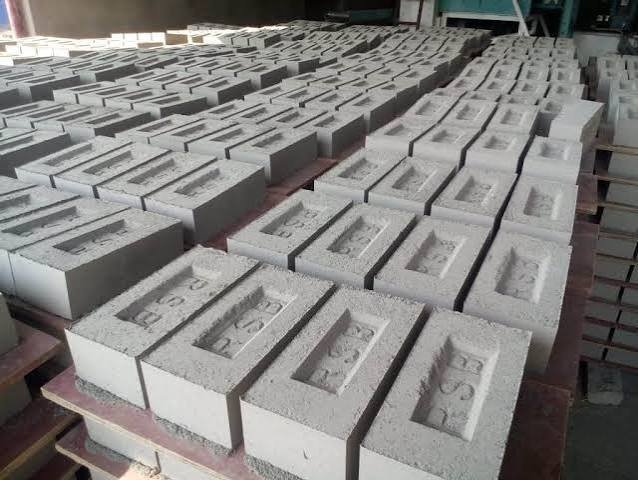
Fly ash bricks are technically superior to red clay bricks — stronger, more uniform, lighter, better insulating, and requiring less mortar. They need no topsoil, addressing a serious environmental concern with traditional kilns. Regulatory backing means manufacturers are not fighting an uphill marketing battle — the product sells itself to informed buyers, and that buyer base is growing fast.
Investment Required
Fly ash brick manufacturing is a capital-moderate business with clear entry points at different scales.
A small manual or semi-automatic unit producing 8,000–15,000 bricks per day can be established for ₹8–20 lakh, covering a hydraulic press machine, mixing equipment, curing area, raw material stock, and basic shed infrastructure.
A medium fully automatic plant producing 25,000–40,000 bricks per day requires ₹25–60 lakh, delivering significantly higher output, better brick consistency, and lower per-unit labour cost.
Raw materials are low-cost and widely available. Fly ash is often free within stipulated distances from power plants. MSME registration, pollution board clearance, and trade licensing are the primary regulatory requirements — all straightforward to obtain.
Revenue and Profit Potential
Fly ash bricks sell at ₹4–7 per brick in most Indian markets, with premium markets and branded players commanding up to ₹8–9 per brick. A small unit producing 10,000 bricks daily and operating 25 days a month generates 2.5 lakh bricks monthly, translating to monthly revenue of ₹10–17.5 lakh at standard market rates.
Raw material, labour, electricity, and overhead costs typically run 55–65% of revenue, leaving gross margins of 35–45%. Net profit margins settle at 20–30%, with monthly net profits of ₹2–5 lakh achievable within 6–12 months of stable production.
What Drives Profitability
Proximity to Fly Ash Source: Setting up near a thermal power plant is the single most important location decision — it minimises input costs and ensures consistent supply.
Direct Supply: Cutting out dealers and supplying directly to construction sites and government contractors improves price realisation and eliminates distribution margin loss.
Quality and Consistency: Large contractors value dimensional uniformity and compressive strength meeting IS standards. Quality machinery and consistent production builds repeat relationships fast.
Challenges to Navigate
Logistics: Bricks are heavy and delivery costs rise with distance. Most profitable operations supply within a 50–100 km radius.
Seasonality: Construction slows during monsoon, creating a 2–3 month revenue dip. Smart operators use this period for maintenance, raw material stocking, and building contractor relationships.
Market Education: In regions where red bricks dominate, educating contractors about fly ash brick benefits requires effort — though this is a diminishing challenge as awareness grows.
The Verdict: Solid Fundamentals, Strong Returns
Fly ash brick manufacturing is a business built on three unshakeable pillars — a near-free raw material mandated by government policy, a construction sector growing at extraordinary scale, and a product that is technically superior to what it replaces. Entrepreneurs who set up near a fly ash source, invest in quality machinery, and build direct contractor relationships will find this a highly profitable and recession-resistant manufacturing business. India needs hundreds of millions of bricks every year — the only question is who will make them.
Frequently Asked Questions (FAQs)
Q1. How much investment is needed?
A small semi-automatic unit costs ₹8–20 lakh. A fully automatic plant requires ₹25–60 lakh. MSME and Mudra loans can support a significant portion for eligible entrepreneurs.
Q2. What licences are required?
Udyam registration, factory licence, pollution control board consent, and GST registration. Bricks must meet BIS standard IS 12894 for institutional and government sales.
Q3. Where do I source fly ash?
Power plants must supply fly ash free within 100 km by government notification. Contact your nearest NTPC or state utility. Proximity to a plant is the most critical site selection factor.
Q4. How long to break even?
A well-located unit with consistent orders typically breaks even within 12–18 months. Direct supply to government projects or large contractors often speeds this up.
Q5. Is it viable across India or only near power plants?
Most profitable near power plants. States like Odisha, Chhattisgarh, Jharkhand, Maharashtra, and UP are strong markets. Fly ash can be transported within 100–150 km economically, making it viable across a broader geography.
Q6. How is market acceptance compared to red bricks?
Growing rapidly among organised builders and government contractors. In Tier-1 and Tier-2 cities they are increasingly the default choice. Rural markets still favour red bricks but regulatory pressure and cost advantages are steadily shifting this. The long-term direction clearly favours fly ash.