In 2026, India’s wool industry continues to occupy a specialised but strategically important space within the country’s textile and rural economy. It is not a mass-scale fibre industry like cotton or synthetics, yet it supports pastoral communities, sustains centuries-old craft traditions, and anchors India’s global reputation in handmade carpets and premium shawls.
What defines the wool industry in 2026 is structural realism. The sector is no longer discussed in terms of rapid expansion, but in terms of stabilisation, quality improvement, and value preservation. Domestic wool production remains limited in volume and quality, forcing continued import dependence. At the same time, exports of value-added woollen products remain strong, and targeted policy interventions are beginning to address long-standing gaps in traceability, artisan access, and authenticity.
This article breaks down the updated size of India’s wool industry in 2026, the drivers shaping its growth, the challenges it continues to face, and the outlook ahead—while retaining the same professional structure and narrative flow.
Quick Overview: Wool Industry in India (2026)
| Aspect | 2026 Status |
| Total industry size | ₹22,000–25,000 crore (entire value chain) |
| Annual growth rate | ~2.6–3.5% (stabilising phase) |
| Domestic wool output | 34.57 million kg (FY 2024–25) |
| Productivity level | ~0.9 kg/sheep (global avg: ~2.4 kg) |
| Import dependence | ~65–70% (fine & apparel-grade wool) |
| Export value | ~US$ 1.83 billion (₹15,200 crore) |
| Export anchor | Handmade carpets (~80% of exports) |
| Key policy framework | Integrated Wool Development Programme (IWDP) |
Industry Size and Structure (2026)
By 2026, India’s wool industry is valued at ₹22,000–25,000 crore, spanning raw wool production, processing, spinning, weaving, handicrafts, and finished woollen goods. Importantly, most of the value in this industry is created downstream, not at the raw wool stage.
Official data released in late 2025 places India’s total wool production at 34.57 million kg for the 2024–25 cycle, reflecting a 2.63% year-on-year growth. While this confirms stability, it also highlights a persistent productivity gap. Indian sheep yield less than half the global average, reinforcing the industry’s dependence on imported fine wool.
The industry structure remains dual and uneven:
- Upstream: Small pastoral households producing largely coarse, carpet-grade wool
- Downstream: Export-oriented carpet units, shawl clusters, mills, and artisan networks
India imports high-quality apparel-grade wool mainly from Australia and New Zealand, processes it domestically, and converts it into high-value products. Institutional coordination and sector development continue to be guided by the Central Wool Development Board, particularly under the Integrated Wool Development Programme.
Key Growth Drivers in 2026
1. Export Strength in Carpets and Handcrafted Products
Exports remain the backbone of the industry. Wool and woollen product exports touched US$ 1.83 billion in FY25, with US$ 614 million recorded in just the first quarter of FY26 (April–July 2025). Handmade carpets alone account for nearly 80% of total wool export value, underscoring India’s dominance in this niche.
Demand from the US, Europe, and the Middle East remains resilient, driven by craftsmanship, design depth, and cultural authenticity.
2. Regional Production Concentration
Wool production is highly concentrated. Rajasthan alone contributes 47.85% of India’s total output, followed by Jammu & Kashmir (22.88%), Gujarat (6.22%), Maharashtra (4.75%), and Himachal Pradesh (4.30%). This geographic concentration shapes policy focus, infrastructure investment, and breed-improvement efforts.
3. The “Pashmina DNA” & GI Enforcement Shift
A major 2026 structural upgrade is the establishment of DNA analysis testing facilities in Leh and Srinagar. For the first time, authentic Pashmina can be scientifically certified. This directly addresses long-standing issues of adulteration and synthetic blending, especially in export markets.
For the shawls and stoles segment, this is a trust-reset moment, strengthening GI enforcement and improving price realisation for genuine producers.
4. Sustainability and Heritage Value
Wool’s natural, biodegradable character continues to support niche demand in premium global markets. Combined with handloom heritage, this positions Indian woollen goods well within sustainability-conscious consumer segments—though volumes remain limited.
Segment-wise Performance
a. Raw Wool Production
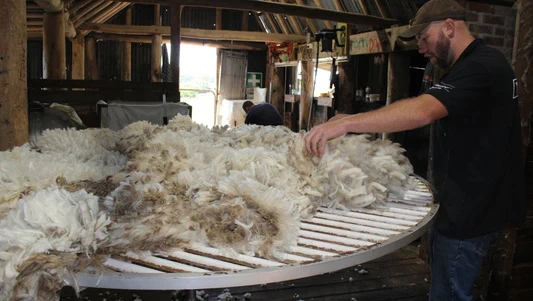
Domestic wool production remains stable but constrained by low yield per animal and limited breed improvement. Growth is incremental rather than transformative.
b. Handmade Carpets and Rugs
This is the industry’s strongest segment by value. Design innovation, export branding, and buyer trust drive performance more than raw material availability.
c. Shawls and Stoles (Including Pashmina)
With DNA certification now operational, this segment is entering a higher-value phase. Authenticity verification is improving export confidence and long-term brand equity.
d. Woollen Apparel and Blankets
This remains a seasonal and region-specific segment, driven by northern states and institutional demand (defence, uniforms, blankets).
Competitive Landscape
India does not compete globally on fine wool production. Instead, it competes on craftsmanship, labour intensity, and value addition. The industry is fragmented, artisan-heavy, and largely decentralised.
Synthetic fibres, blended fabrics, and low-cost imports continue to challenge domestic woollen apparel, especially in urban markets. India’s competitive advantage remains strongest in carpets and heritage textiles.
Key Challenges in 2026
1. Persistent Productivity Gap
At ~0.9 kg of wool per sheep, India’s productivity remains structurally low. Breed improvement and scientific shearing have progressed slowly.
2. Import Dependence and Cost Volatility
Fine wool imports expose the industry to currency movement and global price fluctuations, impacting cost predictability.
3. Quality Control Transition Costs
The push for domestic processing under new Quality Control Orders (QCOs) has raised the cost of high-end spinning machinery in the short term, even as it aims to reduce long-term dependence on imported processed wool.
4. Fragmented Artisan Supply Chain
Despite progress, many artisans still lack direct market access, pricing transparency, and working capital support.
Structural Shifts Visible in 2026
Several important shifts are now clearly visible:
- Scientific authentication of Pashmina through DNA testing
- Digital onboarding of artisans via IndiaHandmade and E-Pehchan cards
- Greater emphasis on value-added exports over raw wool
- Slow but steady formalisation of craft clusters
- Policy focus shifting from volume to livelihood stability
The industry is evolving selectively, not expansively.
Forecast: Wool Industry Outlook (2026–2030)
Short-Term Outlook (2026–2027)
- Stable exports anchored by carpets and shawls
- Limited gains in raw wool productivity
- Higher value realisation through authentication and branding
Medium-Term Outlook (By 2030)
By 2030, India’s wool industry could approach ₹30,000 crore in value. Growth will depend on:
- Successful scaling of breed-improvement programs
- Wider adoption of DNA and GI-based certification
- Stronger digital market linkages for artisans
- Expansion of premium export segments
Growth will be value-led, not volume-led.
Final Perspective
In 2026, India’s wool industry is best described as heritage-rich, export-anchored, and structurally constrained—but no longer stagnant. The sector has accepted its limitations on raw production and is increasingly focused on protecting authenticity, improving traceability, and strengthening artisan livelihoods.
The future of Indian wool lies not in competing on tonnage, but in owning authenticity, craftsmanship, and trust—turning a small-volume fibre into a high-value global story.