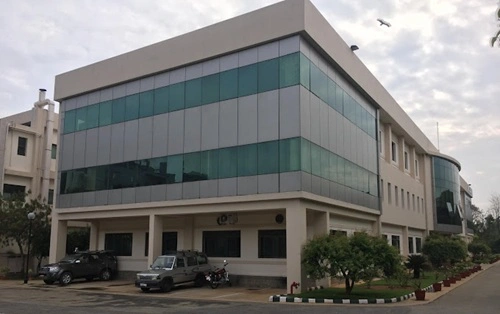
The textile industry has always been one of India’s strongest economic pillars. It connects agriculture to manufacturing, rural jobs to urban exports, and traditional skills to modern industrial systems. By 2026, the Indian textile industry stands at a critical transition stage. It is no longer driven only by volume and low-cost labor. Instead, value addition, sustainability, speed, and global competitiveness now define success.
India remains one of the world’s largest textile producers and exporters. Yet the global textile landscape is changing fast. Demand patterns are shifting, compliance standards are tightening, and competition from other manufacturing nations is intensifying. In this context, understanding the size, growth drivers, challenges, and future outlook of India’s textile industry in 2026 is essential.
This article provides a complete analyst-style assessment of where the industry stands today and where it is heading.

Quick Overview: Textile Industry in India (2026)
| Aspect | Status |
| Global position | Among the top textile and apparel producers worldwide |
| Industry structure | Highly diversified and labor-intensive |
| Value chain strength | Strong from fiber to finished garments |
| Employment | One of the largest job providers in India |
| Export focus | Apparel, home textiles, yarn, fabrics |
| Key pressure points | Cost competitiveness, compliance, fragmentation |
| Outlook | Steady growth with rising emphasis on value and sustainability |
Industry Size and Economic Importance
By 2026, India’s textile and apparel industry represents a multi–hundred-billion-rupee segment of the economy and contributes significantly to industrial output, exports, and employment. It is one of the few sectors that spans the entire value chain domestically—natural fibers like cotton and jute, man-made fibers, spinning, weaving, processing, garmenting, and retail.
The industry supports millions of direct and indirect jobs, making it socially and politically significant. It also plays a key role in export earnings, consistently ranking among India’s top foreign-exchange-generating sectors.
While India’s domestic consumption of textiles continues to grow with population and income levels, exports remain a crucial growth lever, especially for garments and home textiles.
Structure of the Textile Industry
The Indian textile industry is broadly divided into four segments:
- Fiber and yarn production – cotton, man-made fibers, and blended yarns
- Fabric manufacturing – weaving, knitting, and non-woven textiles
- Processing – dyeing, printing, finishing
- Garment and made-ups – apparel, home textiles, technical textiles
One defining characteristic of the industry is its fragmented structure. Alongside large integrated mills, a vast number of small and medium enterprises operate across clusters. This diversity allows flexibility but also limits scale efficiency.
Key Growth Drivers in 2026
1. Rising Domestic Consumption
India’s growing middle class, urbanization, and fashion awareness continue to drive steady demand for apparel and home textiles. Organized retail and e-commerce have expanded access and variety, supporting consumption growth.
2. Export Opportunities and Market Diversification
Global buyers are actively diversifying sourcing bases to reduce over-dependence on a few countries. India benefits from its integrated supply chain, design capabilities, and large workforce, particularly in cotton-based products and home textiles.
3. Shift Toward Value-Added Products
There is a gradual move away from low-margin commodity textiles toward higher-value garments, branded products, and technical textiles. This shift improves profitability and reduces vulnerability to raw material price swings.
4. Government Support and Policy Push
Production-linked incentives, infrastructure support, and modernization schemes are encouraging capacity expansion and technology upgrades. Focus areas include man-made fibers, technical textiles, and large integrated manufacturing parks.
5. Sustainability and Ethical Sourcing
Global brands increasingly demand traceability, lower water usage, reduced emissions, and ethical labor practices. Indian manufacturers investing early in sustainability are gaining long-term buyer confidence.
Major Challenges Facing the Industry
1. Cost Competitiveness
Despite scale, India faces higher logistics costs, power tariffs, and compliance expenses compared to some competing nations. Thin margins leave limited room to absorb shocks.
2. Fragmentation and Scale Limitations
A large portion of the industry operates in small units, making it difficult to achieve economies of scale, invest in technology, or meet large-volume export orders consistently.
3. Compliance and Regulatory Pressure
Environmental norms, labor regulations, and global buyer audits have become stricter. While necessary, compliance increases operating costs, especially for smaller firms.
4. Raw Material Price Volatility
Cotton and man-made fiber prices fluctuate due to global supply-demand dynamics and policy decisions. This volatility affects planning and profitability across the value chain.
5. Skill Gaps and Productivity
While labor availability is high, productivity remains uneven. Skill development, automation, and modern production practices are still not uniformly adopted.
Supply Chain and Competitive Position
India’s biggest competitive advantage is its end-to-end textile ecosystem. Very few countries can offer fiber, yarn, fabric, processing, and garmenting within the same geography. This shortens lead times and supports customization.
However, global competition is intense. Countries with focused export strategies, lower compliance costs, or faster execution often outperform India in price-sensitive segments. To stay competitive, Indian manufacturers are increasingly investing in technology, vertical integration, and supply-chain transparency.
Forecast: Textile Industry Outlook (2026–2030)
Short-Term (2026–2027)
- Moderate growth driven by domestic demand and stable exports
- Continued pressure on margins due to input costs and compliance
- Gradual recovery in global apparel demand after volatility
Medium-Term (2028–2030)
- Stronger growth in technical textiles and man-made fiber segments
- Increased consolidation and scaling of manufacturing units
- Higher share of value-added and branded exports
Growth Outlook
Overall, the textile industry is expected to grow at a steady, mid-single-digit pace, with higher growth in select sub-segments rather than across the board. Success will depend more on efficiency and positioning than pure volume expansion.
Strategic Takeaway
In 2026, India’s textile industry is resilient but under pressure. Its scale, workforce, and integrated supply chain provide a strong foundation. At the same time, rising global standards and cost pressures demand structural upgrades.
The future belongs to manufacturers who move beyond low-cost production and focus on speed, quality, sustainability, and value addition. If these shifts continue, India can strengthen its position as a reliable global textile hub—one that competes not just on price, but on capability and trust.
The textile industry’s next phase will not be about producing more fabric. It will be about producing the right fabric, the right way, for the right markets.