Every business reaches a stage where outside funding becomes necessary. It could be for expansion, managing cash flow, buying equipment, or handling seasonal demand. At that point, business owners usually face a common question: should they choose a secured business loan or an unsecured business loan?
Both options serve different needs. One offers lower cost but requires assets, while the other offers speed and flexibility but at a higher price. Choosing the right one depends on your business size, financial stability, urgency, and risk tolerance. Understanding the differences clearly helps avoid costly mistakes later.
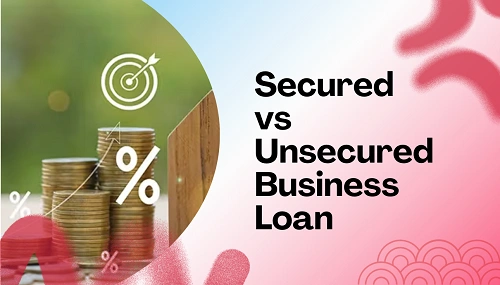
What Is a Secured Business Loan?
A secured business loan is taken by pledging an asset as collateral. This asset can be property, land, machinery, or even fixed deposits. Since the lender has security, the risk is lower, and so is the interest rate.
These loans are usually preferred for long-term business needs and larger funding requirements.
What Is an Unsecured Business Loan?
An unsecured business loan does not require any collateral. Approval is based on the business’s income, credit score, turnover, and repayment history. Because the lender takes higher risk, interest rates are higher.
These loans are often chosen for short-term needs or when assets are not available.
Key Differences Between Secured and Unsecured Business Loans
1. Collateral Requirement
The biggest difference lies in security.
- Secured loans require assets to be pledged.
- Unsecured loans do not require any collateral.
Businesses with valuable assets can access secured loans more easily, while asset-light businesses often rely on unsecured loans.
2. Interest Rates
- Secured business loans come with lower interest rates because the lender’s risk is reduced.
- Unsecured business loans have higher interest rates due to the absence of security.
Over the long term, this difference can significantly impact the total repayment amount.
3. Loan Amount
- Secured loans usually offer higher loan amounts, often based on the value of the asset.
- Unsecured loans have limited loan amounts, depending on income and credit profile.
For large expansion plans, secured loans are usually more suitable.
4. Repayment Tenure
- Secured business loans offer longer repayment periods, sometimes extending to 10–15 years.
- Unsecured loans usually have shorter tenures, typically up to 5 years.
Longer tenure means lower EMIs, which can ease cash flow pressure.
5. Approval and Processing Time
- Secured loans take more time due to asset valuation, legal checks, and documentation.
- Unsecured loans are processed faster, often within a few days.
When funds are urgently required, unsecured loans are usually quicker.
6. Risk Involved
- In secured loans, failure to repay can lead to loss of the pledged asset.
- In unsecured loans, no asset is seized, but credit score damage and legal action are possible.
Secured loans carry asset risk, while unsecured loans carry financial and credit risk.
7. Eligibility Criteria
- Secured loans focus more on asset value and business stability.
- Unsecured loans focus heavily on credit score, income consistency, and business turnover.
Newer businesses may find unsecured loans harder to qualify for without a strong credit profile.
8. Cost Over the Loan Period
- Secured loans are cheaper overall due to lower interest and longer tenure.
- Unsecured loans cost more because of higher interest rates and shorter repayment time.
The total interest paid can be much higher in unsecured loans.
Which Loan Is Better for Small Businesses?
Small businesses with limited assets often prefer unsecured loans for their simplicity and speed. However, if the business owns property or machinery and plans long-term growth, secured loans usually make better financial sense due to lower cost.
Which Loan Is Better for Expansion?
For major expansion, infrastructure development, or equipment purchase, secured business loans are generally more suitable. They provide higher funding at a lower interest rate, making large investments manageable.
Which Loan Is Better for Short-Term Needs?
For short-term requirements like inventory purchase, working capital gaps, or urgent expenses, unsecured business loans are often more practical because of faster approval and minimal formalities.
Factors to Consider Before Choosing
Before deciding between secured and unsecured business loans, it is important to consider:
- Urgency of funds
- Availability of assets
- Business cash flow stability
- Ability to handle EMI pressure
- Long-term vs short-term funding need
- Risk tolerance
The right choice depends on balancing cost, speed, and risk.
Conclusion
There is no single “better” option that fits every business. A secured business loan is better when you need a large amount, want lower interest, and can safely pledge an asset. An unsecured business loan is better when speed, flexibility, and no collateral matter more than cost.
The smarter decision comes from matching the loan type to your business situation, not from choosing what looks easier or faster. When chosen carefully, both secured and unsecured business loans can support growth and stability. When chosen without planning, either can create unnecessary financial stress.