Today Oil and gas industry in India looks larger, more valuable, and more complex than it did even a year ago. The big change is not volume. It is value per barrel. Refining is no longer judged only by fuel output but by how deeply it is integrated with petrochemicals. Gas infrastructure is nearly nationwide, yet pricing friction has emerged. Energy security thinking has also matured, with strategic reserves now treated as economic insurance, not emergency stockpiles.
This is not a sunset industry. It is an industry being re-engineered to survive and stay relevant in an energy-transition decade. Below is a clear snapshot of where the sector stands in early 2026, followed by a detailed breakdown of what is driving growth, what is holding it back, and what the next phase looks like.
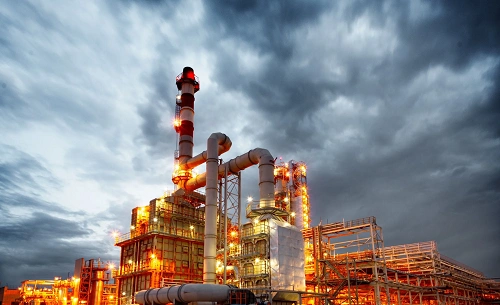
Quick Overview: Oil and Gas Industry in India (2026)
| Indicator | 2026 Status |
| Total industry size | ₹18.5–19.5 trillion |
| Share in primary energy mix | ~52% |
| Crude oil import dependence | ~81–83% |
| Natural gas share | ~7.2% of energy mix |
| Refining capacity | 258.5 MTPA |
| City gas coverage | ~98% of population |
| Annual growth rate | ~4–6% |
| Key growth engine | Petrochemicals (O2C) |
| Industry phase | Value expansion + security focus |
Industry Size and Structure (2026)
As of January 2026, India’s oil and gas industry is valued at ₹18.5–19.5 trillion, a clear jump from earlier estimates. This increase is not driven by higher crude consumption alone. The key reason is the integration of high-value petrochemicals into refining margins, which has structurally lifted industry valuation.
The sector spans four layers:
- Upstream: exploration and production of crude oil and natural gas
- Midstream: pipelines, LNG terminals, storage, and gas distribution
- Downstream: refining, fuel marketing, LPG, ATF, lubricants
- Petrochemicals: polymers, plastics, synthetic materials
Public sector companies such as ONGC, Indian Oil Corporation, Bharat Petroleum, and Hindustan Petroleum continue to dominate upstream and retail fuels. Private players, led by integrated refining and petrochemical operators, are shaping the value-added side of the business.
2026 Market Pulse: Key Indicators
The early-2026 data shows a clear shift in industry fundamentals.
| Indicator | Earlier Range | 2026 Update | Key Driver |
| Industry size | ₹15–17 Tn | ₹18.5–19.5 Tn | Higher petrochemical intensity |
| Refining capacity | ~255–260 MTPA | 258.5 MTPA | Expansion in east & west coast |
| Gas share | ~6.5–7% | ~7.2% | CGD network scale-up |
| Import dependence | ~85% | 81–83% | 3.3% rise in domestic output |
Recent capacity additions at Visakhapatnam and Gujarat refineries have improved both scale and complexity, allowing refiners to process heavier crude while extracting higher-value outputs.
Strategic Shift: The Petrochemical Pivot (O2C)
The defining strategic move of 2026 is the Oil-to-Chemicals (O2C) transition.
Integrated Refinery-Petrochemical Complexes
New and expanded refineries are no longer fuel-centric. Projects such as the Haldia expansion and HPCL Rajasthan Refinery at Barmer are being designed as integrated petrochemical hubs.
The industry’s petrochemical intensity index has risen from about 7% a few years ago to over 13% in 2026, meaning a much larger share of crude is converted into chemicals rather than fuels. This improves margins, reduces exposure to fuel demand volatility, and aligns with long-term consumption trends.
The PVC Investment Surge
In early 2026, India is witnessing its largest-ever investment wave in PVC manufacturing, estimated at roughly ₹35,000 crore. The objective is simple: reduce heavy dependence on imported polymers.
This push strengthens the downstream ecosystem — construction materials, pipes, cables, packaging — and locks in domestic demand for refinery-linked petrochemical outputs.
Natural Gas & LNG: The 2026 Price Challenge
Natural gas remains central to India’s transition strategy, but 2026 has introduced a new layer of complexity.
Infrastructure Is No Longer the Constraint
City Gas Distribution networks now cover nearly 98% of India’s population. Household PNG connections, CNG vehicles, and industrial gas usage have expanded rapidly. On the infrastructure side, India is largely ready for a gas-based economy.
Pricing Becomes the Bottleneck
Globally, LNG supply is entering a surplus phase, with supply projected to rise nearly 50% between 2025 and 2030. Spot prices have softened. However, several long-term contracts signed by Indian PSUs in 2024–25 are linked to Henry Hub pricing.
In early 2026, these contracts are proving costlier than spot LNG, squeezing gas economics for power and industrial users.
A positive development is the expansion of the Dahej LNG Terminal, scheduled for commissioning by mid-2026. The expansion includes discounted regasification rates aimed at stimulating industrial gas demand in western and northern India.
Energy Security: Expanding the “Insurance”
Energy security has become more deliberate and quantitative.
Strategic Petroleum Reserves (SPR)
India has approved Phase II expansion of its Strategic Petroleum Reserves, increasing capacity from 5.33 million tonnes to 11.83 million tonnes. This nearly doubles crude storage cover.
New storage facilities are being developed at Chandikhol (Odisha) and Padur (Karnataka) under a public-private partnership model. Once completed, these sites will add roughly 12 additional days of crude oil cover.
SPR is now viewed as macroeconomic insurance against geopolitical shocks, not just emergency stock.
Key Challenges in Early 2026
1. Ethanol Competition at the Retail Level
The push toward 20% ethanol blending (E20) is creating operational challenges for refiners and oil marketing companies. Storage tanks, pipelines, and retail infrastructure need modification to handle higher ethanol blends safely and efficiently.
This raises capex requirements and operational complexity, particularly for older retail networks.
2. Upstream Rejuvenation Remains Costly
Domestic production has improved modestly, helping reduce import dependence to around 81–83%. ONGC is targeting an 11% output rise by the end of FY26.
However, deep-water and ultra-deep-water exploration remains capital-intensive. Despite regulatory simplification in 2025, private participation is still limited due to high geological and cost risks.
3. Price Controls and Margin Volatility
Fuel pricing remains politically sensitive. Even when international prices move freely, domestic pass-through can be delayed or moderated. This continues to inject uncertainty into downstream margins.
Structural Shifts Defining 2026
Several long-term changes are now clearly visible:
- Refining is becoming chemical-heavy, not fuel-heavy
- Gas is growing, but pricing matters more than pipelines
- Energy security is being institutionalised
- Oil PSUs are evolving into integrated energy companies
- Fossil fuels are being repositioned, not abandoned
Forecast: 2026–2030
Short-Term Outlook (2026–2027)
Industry growth is expected to remain 4–6%, driven by petrochemicals, refining exports, and gas distribution. Fuel demand will grow steadily, though not explosively.
Capex will focus on:
- Integrated refinery-petchem projects
- LNG and gas pipelines
- Strategic storage
Medium-Term Outlook (By 2030)
By 2030, the oil and gas industry could exceed ₹22–24 trillion in value. Fuel demand growth may slow, but petrochemicals, gas, and exports will compensate.
Oil companies will increasingly resemble energy and materials majors, rather than pure fuel suppliers.
Strategic Takeaway
In 2026, India’s oil and gas industry is no longer about pumping more oil. It is about extracting more value from every molecule.
The winners will be those who:
- Deepen petrochemical integration
- Balance gas expansion with smart pricing
- Strengthen energy security assets
- Manage the ethanol transition efficiently
Oil and gas remain central to India’s economy — but in 2026, they are being reshaped for a very different future.