Luggage industry in India 2026 reflects how travel habits, lifestyles, and consumer expectations have changed over the past decade. Luggage is no longer bought only for long-distance travel or once-in-a-lifetime journeys. It has become a frequent lifestyle purchase, influenced by short trips, air travel growth, business mobility, education-related travel, and even fitness and daily commuting needs.
The category today goes far beyond basic suitcases. It includes hard and soft trolleys, backpacks, duffel bags, laptop bags, school bags, and premium travel accessories. Consumers are more aware of durability, weight, design, warranty, and brand reputation. At the same time, price sensitivity remains high, making the industry competitive and margin-conscious.
This article breaks down the current size of India’s luggage industry in 2026, the factors driving its expansion, the problems it faces, and what the future holds.
Quick Overview: Luggage Industry in India (2026)
| Aspect | Status |
| Total industry size | ₹18,000–20,000 crore |
| Annual growth rate | ~8–10% |
| Organised sector share | ~65–70% |
| Major categories | Trolleys, backpacks, duffels, laptop bags |
| Fastest-growing segment | Hard luggage & backpacks |
| Key demand drivers | Travel growth, urban mobility |
| Distribution channels | Offline retail + e-commerce |
| Industry stage | Branded expansion with premium shift |
Industry Size and Structure (2026)
By 2026, India’s luggage industry is estimated to be worth ₹18,000–20,000 crore, covering travel luggage, backpacks, business bags, and accessories. Unlike many FMCG categories, luggage demand is closely tied to travel frequency and lifestyle changes rather than daily consumption.
The industry structure has shifted significantly toward organised and branded players. Earlier, unbranded or locally manufactured bags dominated price-sensitive segments. Today, branded luggage has become the default choice for most urban and semi-urban consumers due to better quality, warranties, and design.
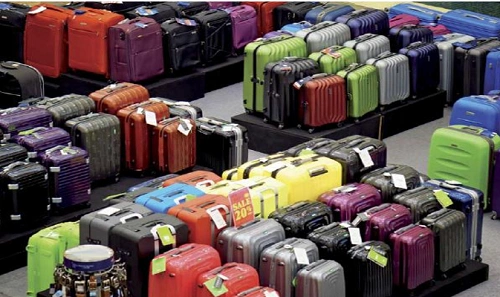
Hard luggage—made from polycarbonate and ABS—has gained popularity due to durability and lightweight construction. Backpacks remain the largest category by volume, driven by students, office-goers, and short-trip travellers.
Manufacturing is spread across India and overseas sourcing hubs, with final assembly, branding, and distribution managed domestically.
Key Growth Drivers in 2026
1. Expansion of Domestic Travel
Domestic travel is the single biggest driver of luggage demand. Short vacations, weekend trips, religious tourism, and work-related travel have increased luggage replacement cycles.
Affordable air travel and improved rail connectivity have encouraged people to travel more often, directly supporting trolley and backpack sales.
2. Rise in Air Travel and Aviation Connectivity
Growth in air passenger traffic has accelerated demand for lightweight, cabin-friendly, and durable luggage. Airlines’ baggage norms have made consumers more conscious about weight and size specifications.
Hard luggage and compact cabin trolleys have seen particularly strong demand in this segment.
3. Urbanisation and Mobility Lifestyles
Urban consumers increasingly use backpacks and duffel bags not just for travel, but also for work, gym, and daily commuting. This has blurred the line between travel luggage and lifestyle accessories.
Design, comfort, and brand perception play a growing role in purchase decisions.
4. Growth of Organised Retail and E-commerce
E-commerce has transformed luggage buying behaviour. Consumers can easily compare prices, features, and warranties online. Heavy discounting during sales events has also increased penetration in price-sensitive segments.
Offline retail continues to matter for touch-and-feel purchases, especially for higher-priced luggage.
5. Brand Trust and Warranty Awareness
Consumers now expect warranties, service support, and replacement policies. This has shifted demand decisively toward branded products and reduced the share of unorganised players.
Brands such as VIP Industries, Samsonite India, and Safari Industries benefit from strong recall and distribution reach.
Segment-wise Performance
a. Travel Trolleys
Trolleys are the largest value segment. Hard luggage has outpaced soft luggage due to better durability and modern aesthetics. Premiumisation is clearly visible in this category.
b. Backpacks
Backpacks account for the highest unit volumes. Demand comes from students, professionals, and travellers. Laptop compatibility, comfort, and style are key differentiators.
c. Duffel Bags and Soft Bags
Duffel bags are popular for short trips and gym use. Growth is steady but slower compared to trolleys and backpacks.
d. Business and Laptop Bags
This segment has stabilised after earlier disruptions. Demand is driven by office-goers and professionals, with preference for sleek and functional designs.
Competitive Landscape
The luggage industry is moderately consolidated, with a few large players controlling a significant share of organised sales. These players compete on design, pricing, distribution reach, and brand trust.
Smaller brands and unorganised manufacturers continue to operate in low-price segments but face pressure due to quality expectations and warranty-driven buying.
Innovation cycles are fast, with frequent new designs and collections launched each year.
Key Challenges in 2026
1. Raw Material and Input Cost Volatility
Prices of polymers, fabrics, zippers, wheels, and metal components fluctuate with global commodity cycles. Since luggage is price-sensitive, passing on cost increases is challenging.
2. High Competition and Discounting
Heavy discounting, especially online, compresses margins. Brands often trade profitability for volume during peak travel and festive seasons.
3. Import Dependence
Many components and finished products rely on imports. Currency fluctuations and supply chain disruptions can impact costs and availability.
4. Counterfeit and Lookalike Products
Unbranded and counterfeit products imitate popular designs, particularly in offline markets. This affects brand pricing power and customer trust.
5. Changing Consumer Expectations
Consumers now expect lightweight designs, modern aesthetics, warranties, and after-sales service—even at lower price points. Meeting these expectations increases operating costs.
Structural Shifts Visible in 2026
Several long-term trends are shaping the luggage industry:
- Shift from unbranded to branded products
- Growing preference for hard luggage
- Faster replacement cycles due to frequent travel
- Strong role of e-commerce and promotions
- Premiumisation in urban markets
The industry is moving from utility-driven buying to lifestyle-led consumption.
Forecast: Luggage Industry Outlook (2026–2030)
Short-Term Outlook (2026–2027)
- Stable demand growth linked to travel recovery
- Continued dominance of backpacks and trolleys
- Margin pressure due to competition and costs
Medium-Term Outlook (By 2030)
By 2030, India’s luggage industry could reach ₹28,000–30,000 crore. Growth will depend on:
- Sustained growth in domestic and air travel
- Expansion into Tier-2 and Tier-3 cities
- Design and product innovation
- Better cost control and supply chain efficiency
Value growth is expected to outpace volume growth.
Final Takeaway
In 2026, India’s luggage industry is no longer just about suitcases. It is a mobility and lifestyle category, shaped by how often and how people move.
Brands that can combine durability, design, pricing discipline, and strong distribution will continue to lead in a market where travel habits—and expectations—are evolving fast.