In 2026, India’s foundry industry continues to operate as a core pillar of the country’s manufacturing ecosystem. Every major industrial sector—automobiles, railways, power equipment, construction, agriculture, defence, and engineering—depends on cast components produced by foundries. Although the industry rarely gets consumer visibility, it plays a decisive role in determining the cost, quality, and competitiveness of Indian manufacturing.
What defines the foundry industry in 2026 is industrial resilience under cost and transition pressure. Demand is steady and broad-based, but margins remain tight due to energy costs, raw material volatility, and rising environmental compliance. At the same time, export opportunities, EV-linked components, and infrastructure-led demand are creating new growth avenues.
This article breaks down the current size of India’s foundry industry in 2026, the factors driving its expansion, the challenges it faces, and what the future holds using the same structured, professional format.
Quick Overview: Foundry Industry in India
| Aspect | Status |
| Total industry size | ₹1.8–2.0 trillion |
| Annual growth rate | ~6–7% |
| Global position | 2nd largest casting producer |
| Annual casting output | ~13–14 million tonnes |
| Major castings | Grey iron, ductile iron, steel |
| Export share | ~15% of production |
| Key demand sectors | Auto, infra, engineering |
| Industry stage | Stable demand, tech transition |
Industry Size and Structure (2026)
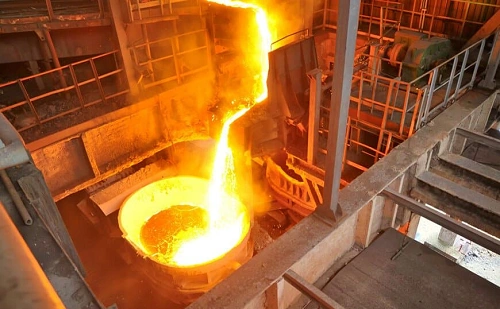
By 2026, India’s foundry industry is estimated to be worth ₹1.8–2.0 trillion, covering the production of ferrous and non-ferrous castings. India remains the second-largest casting producer globally, after China, supplying both domestic industries and international markets.
The industry structure is highly fragmented:
- Over 4,500 foundry units operate across the country
- A large majority are small and medium enterprises
- A smaller set of large, modern foundries dominate exports and high-precision castings
Castings are broadly classified into:
- Grey iron castings, used in engine blocks, machinery, and pipes
- Ductile (SG) iron castings, used in automotive, water, and infrastructure
- Steel castings, used in heavy engineering and power
- Non-ferrous castings, such as aluminium and copper alloys
Major foundry clusters are located in Coimbatore, Kolhapur, Kolkatta-Howrah, Belagavi, Kolhapur, and Ahmedabad regions.
Key Growth Drivers in 2026
1. Automotive and Auto-Component Demand
Automobiles remain the single largest consumer of castings. Engine components, transmission parts, suspension systems, and brake components rely heavily on iron and aluminium castings.
While internal combustion vehicle demand has stabilised, commercial vehicles, tractors, and replacement demand continue to support volumes.
2. Infrastructure and Construction Activity
Infrastructure projects—roads, railways, water supply, and urban development—drive strong demand for ductile iron pipes, manhole covers, and structural castings.
Government-led infrastructure spending provides long-term demand visibility.
3. Engineering and Capital Goods
Power equipment, machine tools, industrial machinery, and pumps rely on high-quality cast components. Revival in capital expenditure supports steady demand from this segment.
4. Export Opportunities
Indian foundries are increasingly supplying to global OEMs seeking cost-competitive sourcing alternatives. Castings exported to Europe, the US, and Southeast Asia contribute meaningfully to value growth.
Export demand is particularly strong for automotive and DI pipe castings.
5. Electric Vehicles and New Applications
EVs use fewer traditional engine castings but require new types of aluminium and specialised components. Foundries that adapt to lightweight materials and precision requirements are gaining early advantages.
Segment-wise Performance
a. Grey Iron Castings
Grey iron remains widely used in machinery and automotive components. Demand is stable but faces long-term pressure from material substitution.
b. Ductile Iron (DI) Castings
DI castings are one of the fastest-growing segments, driven by water infrastructure, sewage, and pipeline projects. Margins are relatively better than grey iron.
c. Steel Castings
Steel castings cater to heavy engineering, mining, and power sectors. Demand is cyclical and project-driven.
d. Non-Ferrous Castings
Aluminium castings are growing faster than the overall industry due to lightweighting trends in automobiles and EVs.
Competitive Landscape
The Indian foundry industry is highly competitive and fragmented. Thousands of small foundries compete on price and proximity, while a limited number of large players compete on quality, certifications, and export capability.
Key competitive factors include:
- Cost efficiency and yield management
- Energy consumption control
- Quality consistency and defect rates
- Environmental compliance
Large foundries benefit from scale, automation, and long-term contracts with OEMs, while smaller units struggle with cost pressures.
Key Challenges in 2026
1. Rising Energy Costs
Foundries are energy-intensive. Electricity, coke, and fuel price volatility directly impacts production costs and margins.
2. Raw Material Price Volatility
Prices of pig iron, scrap, alloys, and aluminium fluctuate significantly. Passing on cost increases is difficult in competitive markets.
3. Environmental Compliance Pressure
Stricter pollution norms related to emissions, sand disposal, and effluent treatment are increasing compliance costs, especially for MSMEs.
4. Technology Gap and Modernisation
Many small foundries still operate with outdated equipment. Limited access to capital slows adoption of automation, digital controls, and cleaner technologies.
5. Labour Availability and Skills
Skilled foundry labour is in short supply. Attrition and safety concerns add to operational challenges.
Structural Shifts Visible in 2026
Several long-term trends are reshaping the foundry industry:
- Gradual shift from grey iron to ductile iron and aluminium
- Increasing automation and process control in organised foundries
- Export orientation for quality-driven units
- Pressure-driven consolidation among smaller foundries
- Growing focus on energy efficiency and sustainability
The industry is transitioning from volume-driven survival to efficiency-driven competitiveness.
Forecast: Foundry Industry Outlook (2026–2030)
Short-Term Outlook (2026–2027)
- Stable domestic demand from auto and infrastructure
- Continued margin pressure due to energy and input costs
- Strong performance by export-oriented foundries
Medium-Term Outlook (By 2030)
By 2030, India’s foundry industry could reach ₹2.6–2.8 trillion in size. Growth will depend on:
- Infrastructure and capital goods expansion
- Adaptation to EV and lightweight casting needs
- Technology upgrades and automation
- Effective environmental compliance support for MSMEs
Value growth will increasingly depend on quality, precision, and export capability rather than sheer tonnage.
Final Perspective
In 2026, India’s foundry industry remains indispensable yet under pressure. Demand fundamentals are strong, but the sector is being forced to evolve faster than ever technologically, environmentally and operationally.
The next phase of growth will belong to foundries that invest in modern processes, energy efficiency, and skilled manpower—transforming India from a low-cost casting supplier into a globally competitive, high-quality manufacturing base.