In 2026, India’s fishing industry stands as one of the country’s most important yet often under-discussed economic sectors. It supports coastal livelihoods, strengthens food security, earns foreign exchange, and plays a growing role in nutrition policy. From small-scale inland fishers to large export-oriented aquaculture farms, fishing in India has evolved into a diverse, production-driven industry rather than a purely traditional occupation.
What defines 2026 is scale with strain. Production has grown steadily, exports remain strong, and aquaculture continues to expand. At the same time, environmental pressure, climate variability, input costs, and regulatory enforcement are testing the sector’s resilience. Growth is real, but sustainability has become unavoidable.
This article outlines the size of India’s fishing industry in 2026, the forces driving its growth, the challenges it faces, and the likely direction of the sector over the next few years.
Quick Overview: Fishing Industry in India (2026)
| Aspect | Status |
| Total industry size | ₹2.6–2.9 trillion |
| Annual growth rate | ~7–9% |
| Total fish production | ~185–190 lakh tonnes |
| Share of aquaculture | ~60–62% |
| Export value | USD 8–9 billion |
| Employment supported | 28+ million people |
| Major segments | Marine fishing, inland fishing, aquaculture |
| Key markets | US, EU, China, Southeast Asia |
| Industry stage | Growth with sustainability pressure |
Industry Size and Structure (2026)
By 2026, India’s fishing industry is valued at approximately ₹2.6–2.9 trillion, covering marine capture fisheries, inland fisheries, aquaculture, processing, cold storage, and exports. India remains one of the world’s largest fish-producing nations, with production approaching 190 lakh tonnes annually.
The structure of the industry is split into three broad segments:
- Marine fisheries, concentrated along India’s long coastline
- Inland fisheries, including rivers, reservoirs, and ponds
- Aquaculture, now the dominant contributor to output
Aquaculture accounts for more than 60% of total fish production, driven primarily by freshwater species such as carp and pangasius, along with shrimp farming for export. Marine capture fisheries have largely plateaued due to ecological limits, while inland and farm-based production continues to expand.
The sector is highly fragmented. Millions of small fishers operate alongside a smaller number of organised farms, processors, and exporters. Government institutions such as the Ministry of Fisheries, Animal Husbandry and Dairying play a central role in policy, subsidies, and infrastructure development.
Growth Drivers in 2026
1. Rising Protein Demand
Fish has become a key component of India’s protein strategy. Compared to meat, fish is widely viewed as affordable, nutritious, and culturally acceptable across regions. Urbanisation and rising incomes have increased per-capita fish consumption, particularly in eastern and southern states.
Government nutrition programs and school meal initiatives are also encouraging higher fish intake, supporting steady domestic demand.
2. Expansion of Aquaculture
Aquaculture remains the strongest growth engine. Advances in seed quality, feed efficiency, and farm management have improved yields. Shrimp farming, in particular, continues to attract investment due to export demand and higher margins.
States such as Andhra Pradesh, West Bengal, Odisha, and Tamil Nadu have become major aquaculture hubs, benefiting from pond-based farming and coastal access.
3. Export Market Strength
India’s seafood exports remain a critical pillar of the industry. Shrimp accounts for the largest share of export earnings, followed by frozen fish and value-added products. The US, European Union, China, and Southeast Asia remain key markets.
Despite periodic trade barriers and quality audits, India’s cost competitiveness and scale allow it to remain a leading global supplier.
4. Government Support and Infrastructure
Public investment in fishing harbours, cold chains, ice plants, and processing units has improved post-harvest efficiency. Schemes under the Pradhan Mantri Matsya Sampada Yojana continue to support modernisation, insurance, and income diversification for fishers.
These initiatives are slowly shifting the industry from volume-driven to value-driven growth.
Segment-wise Performance
a. Marine Fisheries
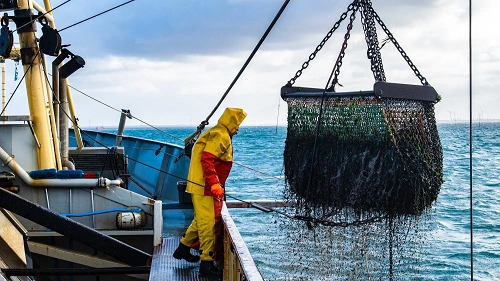
Marine fishing remains important for employment, especially along the western and eastern coasts. However, fish catch growth has stagnated due to overfishing, seasonal bans, and declining near-shore stocks.
The focus is gradually shifting toward deep-sea fishing, better vessel technology, and regulated harvesting to protect marine ecosystems.
b. Inland Fisheries
Inland fisheries have shown consistent growth. Rivers, reservoirs, and floodplain wetlands are being used more efficiently through scientific stocking and management practices.
This segment plays a vital role in rural livelihoods, particularly in eastern India.
c. Aquaculture
Aquaculture is the backbone of growth in 2026. Freshwater fish farming dominates by volume, while shrimp farming leads in value. Technology adoption—such as aeration systems, disease monitoring, and digital advisory tools—is improving productivity.
However, aquaculture is also the most input-intensive segment, making it sensitive to feed costs and disease outbreaks.
Key Challenges in 2026
1. Climate Change and Environmental Stress
Rising sea temperatures, cyclones, floods, and erratic rainfall patterns are directly affecting fish stocks and farm productivity. Climate risk has become one of the biggest uncertainties for the sector.
2. Disease and Biosecurity Risks
Aquaculture faces recurring disease threats, particularly in shrimp farming. Disease outbreaks can wipe out entire crops, causing severe income losses for farmers.
3. Input Cost Inflation
Feed, fuel, ice, and logistics costs have risen steadily. Since many fishers operate on thin margins, cost inflation directly impacts profitability.
4. Fragmented Value Chain
A large part of the industry remains informal. Limited access to finance, modern storage, and processing facilities reduces value realisation, especially for small fishers.
5. Sustainability and Regulation
Overfishing, coastal pollution, and habitat degradation have prompted stricter regulations. While necessary, enforcement sometimes disrupts livelihoods without adequate transition support.
Structural Shifts Defining 2026
Several long-term changes are now visible:
- Aquaculture is overtaking capture fisheries
- Export focus is shifting toward value-added products
- Cold-chain and processing are becoming critical
- Sustainability and traceability are gaining importance
- Small fishers are being linked to organised markets
The industry is slowly professionalising, though unevenly.
Forecast: Fishing Industry Outlook (2026–2030)
Short-Term Outlook (2026–2027)
- Stable production growth led by aquaculture
- Strong export demand, especially for shrimp
- Continued pressure from climate variability
Medium-Term Outlook (By 2030)
By 2030, India’s fishing industry could exceed ₹4 trillion in value. Growth will depend on:
- Sustainable aquaculture practices
- Disease-resistant seed and better feed
- Expanded cold-chain and processing capacity
- Greater focus on domestic consumption
Marine capture fisheries will remain constrained, while inland and farm-based production will drive expansion.
Final Takeaway
In 2026, India’s fishing industry is no longer just about catching fish. It is about farming, processing, exporting, and sustaining livelihoods in a changing climate.
The future of the sector depends on balancing growth with ecological responsibility. Those who invest in sustainable practices, technology adoption, and value addition will define the next phase of India’s fisheries story.