Today India’s electric vehicle (EV) industry is no longer a small, experimental market. It has become one of the fastest-growing segments in the country’s industrial landscape. From two-wheelers to commercial vehicles, battery tech to charging infrastructure, EVs are shaping policy, investment, jobs, and the future of mobility. What was early-stage hype just a few years ago has turned into real traction — but not without friction. India’s EV story in 2026 is one of transition and transformation: fast adoption, policy shifts, manufacturing ambition, and equally deep-rooted challenges.
This article explain the market size and structure, growth drivers, segment trends, challenges, and where the industry is headed over the next few years.
Quick Overview: EV Industry in India
| Indicator | 2026 Status |
| Market size (EVs + infra) | ₹1.2–1.4 trillion |
| EV penetration (total vehicles) | ~15–18% nationally |
| Two-wheelers EV share | ~36–40% of new sales |
| Passenger e-cars EV share | ~10–12% of new sales |
| Commercial EV fleet share | ~18–22% |
| Charging stations (public) | ~25,000+ outlets |
| Battery ecosystem | Growing but import-dependent |
| Policy support | FAME + state incentives active |
| Global exports | Emerging (2W & 3W) |
Market Size and Structure (2026)
By 2026, India’s EV market — including electric two-wheelers, three-wheelers, cars, buses, and commercial vehicles — reached an estimated ₹1.2–1.4 trillion (about USD 14–17 billion) in annual economic activity. This includes manufacturing, sales, charging infrastructure, battery services, and software/connected mobility segments.
The industry’s growth is led by two-wheelers and three-wheelers, where transition away from fossil fuel engines has occurred fastest due to lower vehicle price points, shorter travel ranges, and urban usage patterns. Electric cars have also gained significant traction, especially in urban centers, corporate fleets, and ride-hailing platforms.
Commercial vehicle electrification — especially last-mile delivery vans and small trucks — is rising fast, driven by logistics companies seeking lower operating costs and cleaner credentials.
Public charging infrastructure has grown sharply, with more than 25,000+ public charging stations deployed across major cities, highways, and township clusters, reducing range anxiety and improving adoption rates.
Growth Drivers
1. Policy Framework and Subsidies
Government policy remains one of the most powerful levers for the EV industry. Under schemes such as FAME (Faster Adoption and Manufacturing of Electric Vehicles) and linked state incentives, EV buyers receive purchase rebates, tax breaks, and waived fees in many states. This has effectively narrowed the price gap between EVs and internal combustion engine (ICE) vehicles, especially in the two-wheeler and three-wheeler segments.
States like Karnataka, Delhi, and Gujarat have introduced additional incentives for local manufacturing, charging infrastructure, and scrappage rebates — helping drive both demand and supply.
2. Battery Costs and Tech Innovation
Battery packs are the largest single cost component of an EV. In 2026, India continues to see a steady decline in battery prices, helped by improving chemistries, scaling assembly, and limited domestic cell production. While India still depends on battery imports for critical components, local assembly and gigafactory plans are expanding, and cell production capacity is under construction.
Tech innovations — from solid-state explorations to fast charging algorithms and battery management systems — are starting to yield tangible range and lifespan gains for domestic vehicles.
3. Urban Mobility and Fleet Electrification
The biggest demand shift has come from urban mobility services. Ride-hailing companies and delivery fleets have rapidly electrified due to lower operating costs and easier urban charging logistics. This large, institutional demand has helped create stable order pipelines for EV makers.
School buses, intracity logistics vehicles, and government fleets are also standardizing on electric platforms — driving bulk procurement.
4. Consumer Awareness and Green Trends
Consumer preferences are changing. Environmental awareness, fuel price concerns, and total cost of ownership (TCO) calculations are pushing buyers toward EVs — especially in two- and three-wheelers.
Cities with congestion and pollution issues — like Delhi, Mumbai, Pune, Hyderabad, and Bengaluru — also show higher EV adoption due to local policy incentives and parking/road benefits.
Segment Trends in 2026
1. Two-Wheelers (E-2W)
Two-wheelers dominate the EV adoption chart. With urban commutes, lower prices, and quick charging cycles, e-scooters and e-bikes make up ~36–40% of new two-wheeler sales.
This segment will remain the backbone of EV volume growth — especially as battery tech improves and entry prices continue to fall.
2. Three-Wheelers (E-3W)
Electric auto-rickshaws and cargo trikes lead electrification in last-mile passenger and goods movement. Their economics are compelling: lower operating costs, no fuel dependency, and easier maintenance drive quicker payback periods for drivers and fleet owners.
3. Passenger Cars (EV Cars)
EV penetration in the passenger car segment has climbed to around 10–12% of new sales. This is significant given the historically slow uptake of EV cars in India. Growth is driven by:
- Urban early adopters
- Ride-hailing fleets
- Corporate and government procurement
- Lower running costs vs petrol/diesel cars
Luxury and premium electric SUVs are also expanding in pockets, driven by aspirational buyers.
4. Commercial Vehicles (E-CV)
Commercial vehicle electrification — from small delivery vans to medium haul trucks — is rising steadily. Logistics companies are testing EV fleets for intracity distribution, while refrigerated and cold-chain electrification (important for perishables) is growing.
This trend is still in early stages but shows strong unit economics for high-usage vehicles.
5. Charging Infrastructure and Services
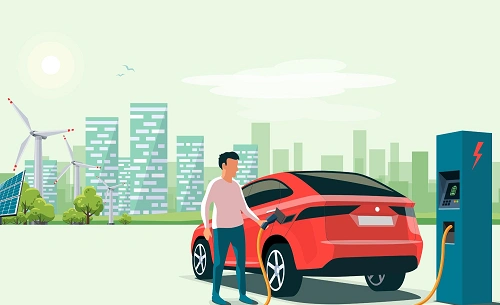
The biggest enabling factor for adoption has been the rollout of public and private charging stations. Highways, malls, housing societies, and workplaces now commonly offer chargers. Rapid DC fast chargers are becoming more competitive with petrol stations in key corridors.
Charging service providers and aggregators are building subscription and app-based payment models, improving user convenience.
Key Challenges in 2026
1. Battery Supply and Cell Manufacturing Gap
India is still heavily dependent on imported battery cells and critical raw materials (lithium, cobalt, nickel). While assembly is domestic, upstream materials and cell production are only beginning to scale. This dependency exposes the industry to global price volatility and geopolitical risks.
2. Infrastructure Unevenness
Despite strong progress, charging infrastructure is still clustered in major cities. Rural and highway charging coverage lags behind, creating adoption barriers in smaller towns and long-haul commercial routes.
Public charging interoperability and standardized payment systems remain works in progress.
3. Cost Competitiveness Across Segments
While EV costs have fallen, upfront prices — especially for cars — are still higher than equivalent ICE models. Subsidies help, but the industry needs further innovation in production scale, local supply chains, and financing models to make EVs equally affordable without incentives.
4. Grid Load and Energy Sustainability
Widespread EV adoption raises questions about grid capacity, peak load management, and renewable energy integration. While EVs can help shift transportation emissions, the environmental impact depends on how clean the electricity supply is. Coordinated planning between EV growth, renewable capacity, and demand-side management is crucial.
Forecast: 2026–2030
Short-Term Outlook (2026–2027)
Growth will remain robust, anchored by:
- Two- and three-wheelers
- Urban fleet electrification
- Charging infrastructure expansion
- Corporate and institutional demand
EV penetration across new vehicle sales is expected to increase steadily — with two-wheelers leading, followed by passenger cars growing faster in urban pockets.
Medium-Term Outlook (By 2030)
By 2030, India’s EV industry could reach ₹3–3.5 trillion in annual economic output. Key features of the 2030 landscape may include:
- E-2W and E-3W dominate unit sales
- 15–20% EV share in new car sales
- Charging infrastructure widely accessible
- Export markets open for Indian EV types
- Domestic cell production coming online
- Stronger integration with renewable energy
EVs will be a mainstream mobility choice across urban and semi-urban India, reshaping personal and commercial transport.
Strategic Takeaway for 2026
Electric mobility in India in 2026 is not a niche dream anymore. It is becoming an industrial reality — supported by policy, shaped by consumers, and driven by innovation.
The early winners will be those who:
- Build scalable battery ecosystems
- Invest in charging networks
- Focus on total cost of ownership
- Partner with fleet operators early
- Invest in software/connected mobility services
India’s EV story is one of gradual but unstoppable transition — from internal combustion to intelligent electric mobility. The journey ahead is long, but 2026 feels like the year when the broad outlines of that future finally took shape.