Cashew industry in India occupies a unique position in the country’s agri-processing landscape. It is not just a farming activity or a food-processing business; it is a labour-intensive, export-linked industry that supports millions of livelihoods, especially in coastal and rural regions. From cashew cultivation and raw nut imports to processing, grading, and exports, the industry is deeply integrated into both domestic consumption and global trade.
Cashews are consumed across income groups in India—used in sweets, snacks, curries, bakery products, and festive gifting. At the same time, India remains one of the world’s largest processors of cashew nuts, importing raw cashews from Africa and re-exporting value-added kernels to international markets. What defines the industry in 2026 is steady demand paired with structural pressure. Consumption is growing, but rising raw material costs, labour constraints, and global competition are reshaping the economics of the sector.
This article breaks down the current size of India’s cashew industry in 2026, the factors driving its expansion, the problems it faces, and what the future holds.
Quick Overview: Cashew Industry in India (2026)
| Aspect | Status |
| Total industry size | ₹45,000–48,000 crore |
| Annual growth rate | ~5–6% |
| Global role | Major processor & exporter |
| Raw cashew dependence | ~65–70% imported |
| Major producing states | Maharashtra, Kerala, Goa, Odisha |
| Processing hubs | Kerala, Karnataka, Tamil Nadu |
| Export markets | US, EU, Middle East |
| Industry stage | Stable demand, margin pressure |
Industry Size and Structure (2026)
By 2026, India’s cashew industry is estimated to be worth ₹45,000–48,000 crore, including domestic consumption and exports of cashew kernels and cashew-based products. India is among the world’s largest processors of cashew nuts, even though domestic production meets only a part of raw nut requirements.
The industry structure spans four main stages:
- Cultivation of cashew apples and nuts
- Import of raw cashew nuts (RCN), mainly from African countries
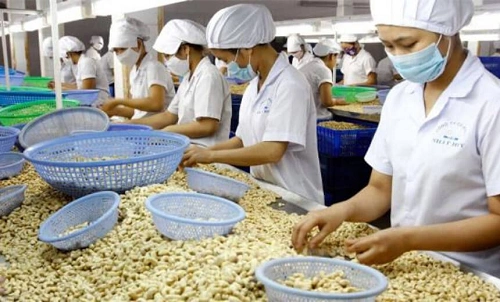
- Processing and shelling, which is labour-intensive
- Domestic sales and exports of kernels and value-added products
A significant portion of processing is done by small and medium units, many of which rely heavily on manual labour. Kerala remains historically important, though processing capacity has spread to other southern and western states.
The industry’s export activities are coordinated and supported by bodies such as the Cashew Export Promotion Council of India, which plays a role in trade facilitation and market development.
Key Growth Drivers in 2026
1. Rising Domestic Consumption
Domestic demand for cashews continues to grow steadily. Cashews are widely used in Indian cooking, sweets, snacks, and festive gifting. Rising incomes and urban lifestyles have increased consumption of packaged nuts and dry fruit mixes.
Cashews are also gaining traction as a premium snack due to their taste and nutritional value.
2. Strong Export Demand
Exports remain a core pillar of the industry. Indian cashew kernels are valued globally for quality, grading standards, and consistency. Demand from the US, Europe, and the Middle East continues, even as price sensitivity has increased.
Exports support foreign exchange earnings and help absorb large volumes processed domestically.
3. Value-Added Product Expansion
Beyond plain kernels, manufacturers are expanding into roasted, flavoured, salted, and packaged cashews. These value-added formats offer better margins and stronger branding opportunities compared to bulk kernel exports.
Retail-ready packaging is increasingly important in both domestic and export markets.
4. Health and Nutrition Awareness
Cashews benefit from being positioned as a natural, plant-based snack rich in healthy fats and minerals. While moderation is emphasised, this health perception supports demand among urban consumers.
Cashews are also used in vegan and plant-based food products, adding to long-term demand potential.
Segment-wise Performance
Raw Cashew Processing
Processing remains the backbone of the industry. However, it is highly sensitive to raw cashew prices, labour availability, and import logistics. Margins in this segment are thin and volatile.
Cashew Kernels (Domestic Sales)
Domestic kernel sales are growing steadily through modern retail and e-commerce. Packaged dry fruit brands are expanding shelf presence, especially during festive seasons.
Export Kernels
Exports account for a significant share of industry value. Pricing depends heavily on global supply, African crop output, and currency movements.
Value-Added Cashew Products
Roasted and flavoured cashews are growing faster than plain kernels. This segment offers better branding opportunities and higher per-unit value.
Competitive Landscape
The cashew industry is fragmented at the processing level. Thousands of small and mid-sized processors operate alongside a limited number of large exporters. Competition is intense, particularly in export markets where price differences are small.
African countries are increasingly processing cashews locally, reducing India’s traditional advantage as a global processing hub. This has intensified competition and pressured margins.
Key Challenges in 2026
Dependence on Imported Raw Cashews
India imports the majority of its raw cashew nuts. Any disruption in African supply, currency movement, or freight cost directly impacts processing economics.
Rising Raw Material Prices
Raw cashew prices have remained elevated due to global demand and supply constraints. Since kernel prices cannot always be raised proportionately, margins are squeezed.
Labour Shortages and Costs
Cashew processing is labour-intensive. Shortage of skilled workers, rising wages, and social compliance requirements are increasing operating costs.
Competition from Origin Countries
Countries in Africa are investing in local processing capacity, reducing the availability of raw nuts for export and competing directly with Indian processors in global markets.
Limited Mechanisation
Although mechanisation has improved, many processing stages still depend on manual labour to maintain kernel quality. Full automation remains costly and challenging for small units.
Structural Shifts Visible in 2026
Several long-term changes are reshaping the industry:
- Gradual shift toward value-added and branded products
- Increasing competition from African processors
- Slow adoption of mechanisation and efficiency tools
- Growing importance of domestic retail demand
- Pressure on traditional processing hubs
The industry is moving from pure processing dominance to a more competitive, margin-focused model.
Forecast: Cashew Industry Outlook (2026–2030)
Short-Term Outlook (2026–2027)
- Stable domestic demand growth
- Continued pressure on processing margins
- Strong but price-sensitive export demand
Medium-Term Outlook (By 2030)
By 2030, India’s cashew industry could reach ₹60,000 crore in size. Growth will depend on:
- Expansion of value-added and branded products
- Better cost control and partial mechanisation
- Stronger domestic consumption
- Strategic sourcing and partnerships with raw nut suppliers
Volume growth will be modest, but value growth can improve with branding and product diversification.
Final Perspective
In 2026, India’s cashew industry is no longer defined only by scale. It is defined by how efficiently it can operate in a tighter, more competitive global environment. Demand both domestic and international remains strong, but easy margins are gone.
The future of the industry lies in moving beyond bulk processing toward value creation, branding, and smarter sourcing, while continuing to support the millions of workers who form the backbone of this historic sector.