For years, India’s economic story was powered largely by government spending and policy push. Roads, railways, digital infrastructure — the state led from the front. But 2026 feels different. The engine has shifted.
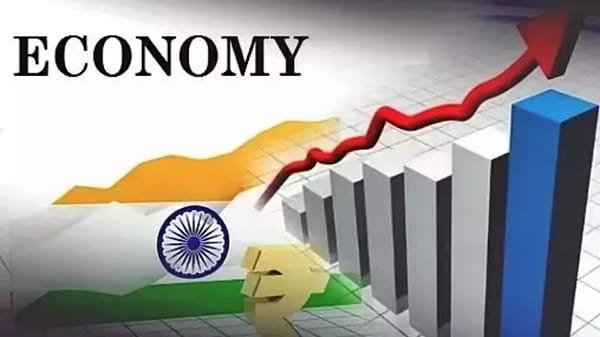
This year marks a clear transition into a private-led growth phase. Consumption is picking up, manufacturing is accelerating, and investment momentum is broadening beyond traditional sectors. With GDP growth projected between 6.4% and 7.6%, India remains the fastest-growing major economy in the world.
But beneath that strength, there are tensions. Jobs are not growing as fast as output. Climate risks are rising. Global trade is becoming unpredictable. And while India is building capacity, it still depends heavily on imports in critical sectors like electronics.
In 2026, the Indian economy is not struggling — it is evolving. The real question is whether it can turn this momentum into sustained, balanced growth.
Economic Snapshot (May 2026)
| Indicator | Value / Trend |
| GDP Growth Projection | 6.4% – 7.6% |
| Inflation (CPI, March 2026) | 3.4% |
| FDI Inflows (FY26) | $90+ billion |
| Unemployment Rate | 5.1% (rising) |
| Services Export Growth | +17.7% YoY |
| Manufacturing GVA Growth | 9.13% |
| Monsoon Forecast | Below normal (92% of LPA) |
Strengths
Resilient GDP growth: India continues to lead global growth charts, with strong contributions from consumption and manufacturing. Manufacturing GVA growth crossing 9% signals a revival in industrial activity.
Massive and diversifying FDI inflows: Foreign Direct Investment is set to exceed $90 billion, with new investor participation from non-traditional countries like Brazil and New Zealand — a sign of widening global confidence.
Strong services export momentum: Services exports have grown 17.7% year-on-year. India now holds around 16% of the global AI talent pool, strengthening its position in high-value digital services.
Controlled inflation environment: Retail inflation remains relatively stable (around 2.1%–3.4% in early 2026), giving policymakers room to support growth.
Demographic advantage: A young population continues to drive consumption, innovation, and workforce expansion — a long-term structural strength.
Weaknesses
Rising unemployment concerns: Unemployment has climbed to 5.1%, with urban joblessness — especially among women (around 9%) — remaining a major structural issue.
High import dependence in technology: Despite initiatives like “Make in India,” India still imports a large share of high-value electronic components, with dependency levels around 70%.
Skill gap in Industry 4.0 sectors: There is a shortage of skilled workers in areas like AI, robotics, and mechatronics, forcing large investments (₹15,000 crore+) in training and R&D.
Uneven income distribution: Growth is not equally distributed, with rural and lower-income segments still facing pressure.
Infrastructure execution gaps: While large projects are underway, last-mile connectivity and efficiency challenges still exist in logistics and urban systems.
Opportunities
Expansion of PLI schemes: The Production Linked Incentive (PLI) framework now covers 14+ sectors with an outlay of ₹1.97 lakh crore, positioning India as a strong “China+1” manufacturing alternative.
Green energy transition: Investments in green hydrogen, renewable energy, and modernization funds are creating a new clean-tech growth ecosystem.
MSME transformation: With over 6.3 crore MSMEs, reforms like GST 2.0 and a ₹10,000 crore growth fund aim to shift small businesses from survival to expansion mode.
Improving logistics efficiency: Infrastructure projects aim to reduce logistics costs from 14% to 8–10% of GDP — a major boost to global competitiveness.
Digital economy expansion: India’s leadership in digital payments, fintech, and AI services continues to open new growth avenues.
Threats
Climate risks and monsoon uncertainty: A below-normal monsoon (92% of long-period average) could trigger food inflation, pushing CPI above 4.5% in the second half of 2026.
Global trade volatility: Rising tariffs and geopolitical tensions — especially in West Asia — threaten supply chains and increase energy costs.
Geopolitical instability: Disruptions in maritime routes could impact imports of crude oil and raw materials, affecting inflation and growth.
Competition from Southeast Asia: Countries like Vietnam and Thailand are aggressively competing for manufacturing investments, challenging India’s “China+1” strategy.
Interest rate and demand risks: Global economic slowdown and high interest rates could reduce export demand and private investment.
Verdict
The Indian economy in 2026 is in a strong but delicate position. Growth is solid, investment is rising, and global confidence remains high. The shift toward private-led expansion is a positive sign of maturity.
But the challenges are real. Job creation is not keeping pace with growth. Climate risks are becoming more visible. And global uncertainties are adding pressure to trade and supply chains.
The next phase will depend on three critical priorities. First, how effectively India converts growth into employment. Second, how quickly it reduces import dependence in key sectors like electronics. And third, how well it manages climate and inflation risks without slowing momentum.
India is no longer just a fast-growing economy. It is a complex, evolving system trying to balance speed with stability — and how it handles this balance will define its trajectory for the next decade.