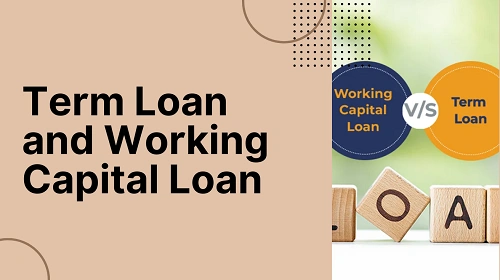
When a business looks for external funding, two loan types usually come into discussion: term loans and working capital loans. Both provide money, both charge interest, and both are widely used by businesses of all sizes. However, they are meant for very different purposes and function in very different ways.
Confusing one for the other can create serious cash flow problems. Using a long-term loan for daily expenses or a short-term loan for long-term investments often leads to unnecessary financial stress. Understanding the difference clearly helps businesses choose the right tool at the right time.
What Is a Term Loan?
A term loan is a loan taken for a fixed period and repaid through regular installments. It is mainly used for long-term business needs such as purchasing machinery, expanding operations, upgrading infrastructure, or acquiring assets.
Once approved, the lender cannot suddenly demand repayment as long as EMIs are paid on time. The borrower knows the exact tenure, EMI amount, and total cost from the beginning.
What Is a Working Capital Loan?
A working capital loan is used to fund the day-to-day operational expenses of a business. This includes paying suppliers, managing inventory, covering salaries, handling rent, and managing short-term cash gaps.
Working capital loans are short-term in nature and are designed to keep business operations running smoothly. They are often renewed periodically based on business performance.
Core Difference in Purpose
The biggest difference lies in why the loan is taken.
- Term loans are meant for long-term growth and asset creation
- Working capital loans are meant for daily operations and liquidity management
Using the wrong loan for the wrong purpose can disturb financial balance.
Repayment Structure
Term loans follow a structured repayment plan:
- Fixed EMIs
- Monthly, quarterly, or annual installments
- Clear end date
Working capital loans have flexible repayment:
- Interest may be paid monthly
- Principal may be repaid as cash comes in
- Often no fixed EMI structure
This flexibility suits operational needs but requires careful monitoring.
Loan Tenure
Term loans have a defined tenure, which can range from:
- 1–5 years for short-term term loans
- 5–15 years for long-term business loans
Working capital loans are usually short-term:
- 6 months to 1 year
- Often renewed annually
The duration reflects the nature of use.
Interest Calculation
Term loan interest is usually calculated on a reducing balance as EMIs are paid.
Working capital loan interest is often calculated on the amount utilized, not the full sanctioned limit.
This means businesses pay interest only on what they actually use in working capital facilities.
Loan Amount
Term loan amounts depend on:
- Business turnover and profitability
- Purpose of the loan
- Collateral availability
Working capital loan limits depend on:
- Inventory levels
- Receivables and payables
- Cash flow cycle
Working capital limits are closely tied to business operations.
Collateral Requirement
Term loans may be secured or unsecured. Larger amounts usually require collateral such as property or machinery.
Working capital loans are often secured by:
- Stock
- Receivables
- Current assets
The security reflects the short-term nature of the loan.
Impact on Cash Flow
Term loan EMIs are fixed, which can create pressure if revenue fluctuates.
Working capital loans adjust with business activity. During slow periods, lower usage reduces interest cost.
This makes working capital loans more adaptable to business cycles.
Risk Factor
Term loans involve long-term commitment. A drop in business income can make EMIs difficult to manage.
Working capital loans carry renewal risk. Banks may revise or reduce limits based on business performance.
Each has a different kind of risk profile.
Accounting and Financial Planning
Term loans are recorded as long-term liabilities and planned over years.
Working capital loans are short-term liabilities and require constant tracking.
Good financial discipline is essential for both, but working capital loans need closer daily attention.
Which Loan Is Better for New Businesses?
New businesses often struggle to get large term loans due to lack of financial history.
Working capital loans may be easier to access once basic operations begin, though limits may be smaller.
As the business grows, term loans become more accessible.
Which Loan Is Better for Expansion?
For expansion, machinery purchase, or capacity building, term loans are the right choice.
Using working capital loans for expansion can create liquidity stress.
Which Loan Is Better for Daily Operations?
For managing inventory, supplier payments, and cash gaps, working capital loans are essential.
Using term loan funds for daily expenses reduces long-term financial efficiency.
Can a Business Use Both?
Yes. Most established businesses use both:
- Term loans for growth and assets
- Working capital loans for smooth operations
Using both correctly creates balance between stability and liquidity.
Common Mistakes to Avoid
- Using working capital loans for long-term investments
- Using term loans for routine expenses
- Ignoring renewal conditions of working capital loans
- Overestimating cash flow stability
Avoiding these mistakes keeps finances healthy.
Conclusion
Term loans and working capital loans are not interchangeable. A term loan supports long-term growth and asset creation with predictable repayment. A working capital loan keeps daily business operations running smoothly by managing short-term cash flow needs.
The right choice depends on purpose, cash flow pattern, and business stage. When used correctly, both loans strengthen a business. When misused, even a good loan can become a financial burden. Understanding this difference is the foundation of smart and sustainable business financing.