When you need money, choosing the right type of loan matters as much as the amount itself. Two of the most common options in India are personal loans and home loans. Both help meet financial needs, but they are built for very different purposes. One offers flexibility and speed, while the other focuses on long-term affordability and asset creation.
Picking the wrong loan can increase costs and pressure your finances. Picking the right one can save interest, reduce stress, and support your long-term goals. This detailed comparison covers every important aspect so you can decide which option suits you better.
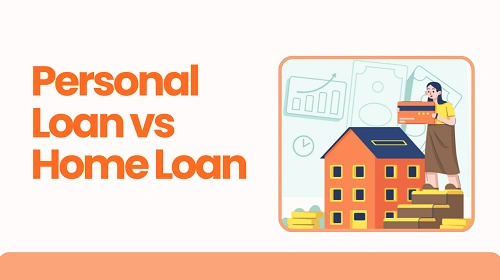
Basic Difference Between Personal Loan and Home Loan
A personal loan is an unsecured loan. You do not pledge any asset. Approval depends on income, credit score, and repayment history. The money can be used for almost any purpose.
A home loan is a secured loan taken to buy, build, or renovate a house. The property itself is pledged as security. Because of this, home loans are cheaper and available for much longer periods.
This single difference—security versus no security—shapes everything else.
Purpose of the Loan
Purpose is the first deciding factor.
Personal loans are flexible. They can be used for medical expenses, weddings, travel, education, debt consolidation, or emergencies. There are usually no restrictions on usage.
Home loans are purpose-specific. The funds can only be used for housing-related needs. Lenders monitor usage closely.
If your need is not related to buying or building a house, a home loan is not an option.
Interest Rates
Interest rate difference is one of the biggest factors.
Home loans have much lower interest rates because they are secured by property and involve lower risk for the lender.
Personal loans carry higher interest rates since there is no collateral and the risk is higher.
Over long periods, this difference can result in a very large gap in total repayment.
Loan Amount
Home loans generally offer large loan amounts. Depending on income and property value, lenders may finance 75%–90% of the property cost.
Personal loans usually have lower limits. The amount depends on income, employer profile, and credit score. Even high-income borrowers have a ceiling.
For big-ticket needs like property purchase, home loans are clearly superior.
Repayment Tenure
Home loans offer long repayment tenures, often up to 25 or even 30 years. This keeps EMIs manageable.
Personal loans have shorter tenures, usually between 1 and 5 years. Short tenure means higher EMIs.
Longer tenure reduces monthly burden but increases total interest paid. Shorter tenure increases EMI but ends the loan faster.
EMI Burden and Monthly Planning
Because of longer tenure and lower interest, home loan EMIs are usually lower compared to the loan amount.
Personal loan EMIs are higher because of higher interest rates and shorter repayment periods.
If stable long-term planning is important, home loans feel more comfortable on the monthly budget.
Eligibility Criteria
Personal loans have stricter eligibility in terms of credit score and income stability. Lenders closely examine repayment history.
Home loan eligibility also depends on income and credit score, but the presence of property reduces risk, making approval easier in many cases.
Borrowers with moderate credit profiles may still qualify for home loans more easily than personal loans.
Documentation
Personal loans require income proof, bank statements, employment details, and credit checks.
Home loans require all of that plus extensive property documents, legal verification, and valuation reports.
Personal loans are simpler to apply for. Home loans involve more paperwork.
Processing Time
Personal loans are fast. Many are approved within hours or a few days.
Home loans take longer because of property checks and legal processes.
For urgent needs, personal loans are faster. For planned purchases, home loans are suitable.
Security and Risk
Personal loans do not put any physical asset at risk. However, default can seriously damage your credit score and lead to legal action.
Home loans involve the risk of losing the property if EMIs are not paid. The emotional and financial impact of such a loss is significant.
Personal loans risk future borrowing ability. Home loans risk a major asset.
Tax Benefits
Home loans offer strong tax benefits on both principal repayment and interest paid, subject to tax laws.
Personal loans generally do not offer tax benefits, except in limited cases where the loan is used for business or specific purposes.
For salaried individuals, tax savings make home loans much more attractive.
Flexibility of Usage
Personal loans offer complete freedom. You decide how to use the money.
Home loans offer no such flexibility. Funds are strictly tied to housing.
If flexibility matters, personal loans win clearly.
Total Cost Over Time
Even though home loans run for many years, their lower interest rates and tax benefits usually make them cheaper overall.
Personal loans cost more due to higher interest, even though the tenure is shorter.
Total cost should always be calculated, not just EMI.
Which Loan Is Better for Salaried Individuals?
For salaried individuals planning to buy a home, home loans are clearly better. They offer affordability, stability, and tax savings.
Personal loans work better for short-term needs or non-housing expenses, especially when income is stable and EMIs are manageable.
Which Loan Is Better for Self-Employed Borrowers?
Self-employed borrowers may find personal loans harder to qualify for due to income variability.
Home loans, backed by property, are often easier to access for self-employed individuals with clear income records and owned property.
Emotional and Long-Term Impact
A home loan often represents long-term stability and asset creation. It is a commitment but also an investment.
A personal loan is a convenience tool. It solves immediate problems but does not create an asset.
Understanding this difference helps align loans with life goals.
Conclusion
There is no single answer to which loan is better. A personal loan is better when you need quick money, flexibility, and have a short-term repayment plan. A home loan is better when the goal is to buy or build a house, keep EMIs affordable, and benefit from lower interest and tax savings.
The right choice depends on purpose, repayment capacity, and long-term financial planning. When chosen thoughtfully, both personal loans and home loans can serve their purpose well. When chosen casually, either can become a financial burden. The smarter decision is the one that fits your need—not just the one that is easiest to get.