In 2026, India’s plywood industry sits at the intersection of housing demand, interior design trends, and manufacturing formalisation. Plywood is no longer just a construction input hidden behind walls and cabinets. It has become a visible, brand-led product tied to durability, safety, and finish quality in homes, offices, retail spaces, and public buildings.
What defines the plywood industry today is steady demand with rising expectations. Urbanisation, renovation activity, and organised real estate continue to support volumes, while consumers are far more aware of product grades, warranties, emission standards, and brand credibility. At the same time, the industry faces pressure from raw material sourcing, compliance costs, and competition from alternative materials.
This article breaks down the current size of India’s plywood industry in 2026, the factors driving its expansion, the problems it faces, and what the future holds.
Quick Overview: Plywood Industry in India (2026)
| Aspect | Status |
| Total industry size | ₹45,000–50,000 crore |
| Annual growth rate | ~7–8% |
| Organised sector share | ~55–60% |
| Major applications | Furniture, interiors, construction |
| Key raw materials | Hardwood logs, veneers, adhesives |
| Import dependence | Limited (logs & chemicals) |
| Major demand centres | Urban & Tier-2 cities |
| Industry stage | Brand-led formalisation |
Industry Size and Structure (2026)
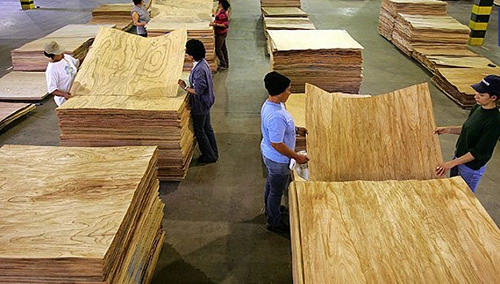
By 2026, India’s plywood industry is estimated to be worth ₹45,000–50,000 crore, covering commercial plywood, decorative plywood, block boards, marine plywood, and allied engineered wood products. Demand is driven primarily by furniture manufacturing, interior fit-outs, and residential construction.
The industry structure is transitioning from fragmented to organised. Historically dominated by small, regional manufacturers, the sector has seen steady formalisation due to GST, stricter standards, and increased consumer awareness. Organised players now command a majority share in urban markets, while unorganised units continue to operate in price-sensitive and rural segments.
Manufacturing clusters are concentrated in states such as Haryana, Punjab, Uttar Pradesh, Assam, and parts of South India. Proximity to timber sources, skilled labour, and large consumption markets influences plant locations.
Key Growth Drivers in 2026
1. Housing and Interior Fit-Out Demand
Residential construction and interior finishing remain the largest demand drivers. New homes, renovations, and upgrades all require plywood for kitchens, wardrobes, doors, and furniture.
Even when real estate cycles soften, interior renovation demand provides a stable base for plywood consumption.
2. Urbanisation and Lifestyle Upgrades
Urban households increasingly prioritise modular kitchens, custom furniture, and better interior finishes. This shift favours higher-grade plywood with better strength, moisture resistance, and surface finish.
Tier-2 cities are emerging as important growth markets, narrowing the gap with metros.
3. Rise of Organised Furniture and Interior Brands
Growth of organised furniture retailers and interior solution providers has increased demand for consistent, certified plywood. These buyers prefer branded suppliers to ensure quality, warranty, and compliance.
This trend benefits organised plywood manufacturers with scale and distribution reach.
4. Brand Awareness and Quality Certification
Consumers are now more aware of parameters such as boiling water proof (BWP) grades, termite resistance, and emission standards. Brand trust plays a growing role in purchase decisions, especially for long-life applications.
Advertising and dealer education have strengthened brand pull at the retail level.
5. Commercial and Institutional Construction
Offices, retail stores, hotels, and educational institutions continue to use plywood extensively for interiors and fixtures. Commercial projects prefer standardised specifications, supporting organised suppliers.
Segment-wise Performance
a. Commercial Plywood
Commercial plywood is the largest segment by volume. It is widely used in furniture and interiors. Growth is steady, but margins are sensitive to raw material prices.
b. Decorative and Premium Plywood
This segment caters to visible applications and premium interiors. It offers better margins and is driven by design, finish, and brand positioning.
c. Marine and BWP Plywood
Marine-grade and BWP plywood are used in moisture-prone areas such as kitchens and bathrooms. Demand is growing as consumers prioritise durability and long-term performance.
d. Block Boards and Engineered Panels
Block boards and engineered wood products are gaining traction for doors and partitions. They offer stability and cost advantages in specific applications.
Competitive Landscape
The plywood industry is competitive and brand-driven. Large organised manufacturers with national distribution networks dominate premium and mid-range segments, while smaller players compete on price at the lower end.
Organised players benefit from:
- Strong dealer networks
- Advertising and brand recall
- Quality certifications and warranties
Unorganised manufacturers continue to face pressure from compliance costs, rising raw material prices, and consumer preference for branded products.
Price competition remains intense, particularly in standard grades.
Key Challenges in 2026
1. Raw Material Sourcing Constraints
Availability of quality timber and veneers remains a structural challenge. Restrictions on forest logging and dependence on plantations increase procurement costs and supply uncertainty.
2. Rising Input and Compliance Costs
Adhesives, chemicals, power, and labour costs have risen. At the same time, compliance with quality and environmental standards adds to manufacturing expenses.
3. Competition from Alternative Materials
Engineered boards, MDF, particle boards, and metal-based furniture solutions are increasingly used as substitutes in certain applications. This limits plywood’s pricing power.
4. Unorganised Sector and Quality Variance
Substandard products in the market affect consumer trust and pricing discipline. While formalisation is increasing, enforcement remains uneven across regions.
5. Working Capital Pressure
Plywood manufacturing is working-capital intensive due to inventory cycles and dealer credit. Smaller players, in particular, face financing constraints.
Structural Shifts Visible in 2026
Several long-term trends are shaping the plywood industry:
- Shift from unbranded to branded plywood
- Growing demand for certified and premium grades
- Increased role of interior and furniture brands
- Gradual consolidation among manufacturers
- Greater consumer focus on durability and safety
The industry is moving from commodity selling to brand-led specification buying.
Forecast: Plywood Industry Outlook (2026–2030)
Short-Term Outlook (2026–2027)
- Stable demand from housing and interiors
- Continued margin pressure from input costs
- Market share gains for organised players
Medium-Term Outlook (By 2030)
By 2030, India’s plywood industry could reach ₹70,000 crore in size. Growth will depend on:
- Sustained housing and renovation demand
- Expansion into Tier-2 and Tier-3 cities
- Stronger plantation forestry and raw material supply
- Product innovation and branding
Value growth is expected to outpace volume growth as premium products gain share.
Final Perspective
In 2026, India’s plywood industry is maturing into a brand- and quality-conscious market. Demand fundamentals remain strong, but success increasingly depends on trust, consistency, and compliance rather than price alone.
Manufacturers that secure raw material supply, invest in branding, and align with evolving interior trends will be best positioned to lead the industry through its next phase of formal, sustainable growth.