In 2026, India’s bakery industry sits quietly at the centre of everyday consumption. Bread on breakfast tables, biscuits with evening tea, cakes for birthdays, and savoury baked snacks for quick meals—bakery products cut across income levels, age groups, and regions. Unlike trend-driven food categories, bakery is built on habit, affordability, and scale.
What defines the bakery industry in 2026 is steady volume with selective premium growth. Mass products like bread and biscuits continue to dominate consumption, while cakes, pastries, cookies, and health-oriented baked goods are driving value expansion. At the same time, the sector is facing rising input costs, changing nutrition expectations, and pressure to modernise in a largely fragmented market.
This article looks at the size of India’s bakery industry in 2026, the forces supporting its growth, the challenges shaping the sector, and how the industry is expected to evolve in the coming years.
Quick Overview: Bakery Industry in India (2026)
| Aspect | Status |
| Total industry size | ₹1.35–1.45 trillion |
| Annual growth rate | ~7–8% |
| Organised sector share | ~45–50% |
| Key product categories | Bread, biscuits, cakes, cookies |
| Major demand centres | Urban & semi-urban India |
| Consumption nature | Daily staples + occasions |
| Industry structure | Highly fragmented |
| Growth character | Volume-led with premium tilt |
Industry Size and Structure (2026)
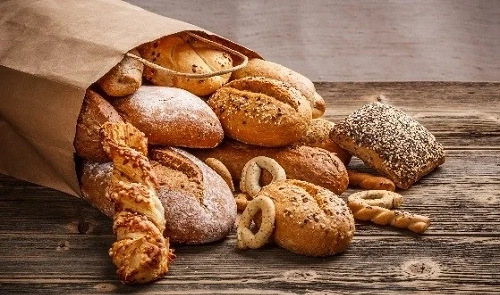
By 2026, India’s bakery industry is estimated to be worth ₹1.35–1.45 trillion, making it one of the largest segments within the processed food sector. The industry includes packaged bread, biscuits, cakes, pastries, rusks, buns, cookies, and a growing range of savoury baked snacks.
The structure of the industry is split between organised and unorganised players. Large national and regional manufacturers dominate packaged bread and biscuits, supported by strong distribution networks and automated plants. Alongside them, thousands of small neighbourhood bakeries, local units, and artisanal outlets cater to fresh and customised demand.
Broadly, the industry can be divided into:
- Bread and buns, which form the backbone of daily consumption
- Biscuits and rusks, high-volume and shelf-stable categories
- Cakes and pastries, driven by celebrations and gifting
- Cookies and premium baked goods, catering to urban and premium consumers
Bread and biscuits together account for the majority of volumes, while cakes, cookies, and premium baked goods contribute more to value growth.
Key Growth Drivers in 2026
Everyday Consumption and Habitual Demand
Bakery products, especially bread and biscuits, are part of daily routines for millions of households. This habitual consumption makes the industry resilient to economic slowdowns.
Bread remains a low-ticket, high-frequency purchase, providing stable baseline demand across urban and semi-urban markets.
Urbanisation and Changing Lifestyles
As urban lifestyles become more time-constrained, bakery products serve as convenient meal and snack options. Sandwich bread, buns, and ready-to-eat baked snacks fit well into modern eating habits.
This shift supports steady growth in packaged bakery products.
Growth of Celebrations and Gifting Culture
Cakes and pastries benefit from India’s expanding celebration culture. Birthdays, anniversaries, office events, and festivals continue to drive demand for customised and premium cakes.
Online ordering and doorstep delivery have further boosted this segment.
Premiumisation in Urban Markets
Urban consumers are increasingly willing to pay more for better ingredients, freshness, and variety. Cookies, brownies, sourdough bread, and gourmet pastries are gaining traction in metros and Tier-1 cities.
While volumes are smaller, margins are significantly higher.
Expansion of Modern Retail and Quick Commerce
Supermarkets, convenience stores, and quick-commerce platforms have improved visibility and availability of bakery products. Faster restocking and impulse buying support incremental sales.
Digital ordering is becoming particularly important for cakes and premium bakery items.
Segment-wise Performance
Bread and Buns
This remains the largest segment by volume. Demand is stable and price-sensitive, with limited scope for sharp price increases. Whole wheat and multigrain variants are slowly gaining share.
Biscuits and Rusks
Biscuits dominate packaged bakery consumption and continue to see strong rural and urban demand. Rusks perform well as tea-time accompaniments, especially in northern and western India.
Cakes and Pastries
This segment is growing faster than the industry average. Customisation, design, and freshness are key differentiators. Home bakers and boutique bakeries are expanding this category.
Cookies and Premium Bakery Products
Cookies and gourmet baked items cater to higher-income consumers. Demand is driven by taste innovation, gifting, and café culture.
Competitive Landscape
The bakery industry in India is highly fragmented and locally competitive. Large organised players dominate packaged bread and biscuits, while small and mid-sized bakeries compete on freshness, proximity, and customisation.
Competition is shaped by:
- Pricing and pack size
- Distribution reach
- Product freshness and shelf life
- Brand familiarity and trust
Entry barriers are low for small bakeries but scale advantages favour organised manufacturers.
Key Challenges in 2026
Rising Input Costs
Key inputs such as wheat flour, sugar, edible oils, dairy products, and packaging materials have seen cost inflation. Since bakery products are price-sensitive, passing on these costs is difficult.
Health and Nutrition Concerns
Bakery products are increasingly scrutinised for refined flour, sugar, and preservatives. Urban consumers are more conscious about nutrition, affecting demand for traditional white bread and sugary cakes.
Shelf Life and Wastage
Fresh bakery products have short shelf lives. Managing inventory, forecasting demand, and reducing wastage remain operational challenges, especially for small bakeries.
Fragmentation and Inconsistent Quality
A large unorganised sector leads to wide quality variation. Food safety compliance and standardisation remain uneven across regions.
Margin Pressure
Bread and mass biscuits operate on thin margins. Profitability depends on scale, efficiency, and tight cost control.
Structural Shifts Visible in 2026
Several long-term trends are shaping the bakery industry:
- Gradual shift from white bread to whole wheat and multigrain
- Growth of premium and artisanal bakeries in cities
- Increased use of digital ordering for cakes and pastries
- Smaller pack sizes to manage affordability
- Automation and efficiency improvements in organised plants
The industry is evolving incrementally rather than dramatically.
Forecast: Bakery Industry Outlook (2026–2030)
Short-Term Outlook (2026–2027)
- Stable growth driven by bread and biscuits
- Faster expansion in cakes, cookies, and premium segments
- Continued pressure from input costs
Medium-Term Outlook (By 2030)
By 2030, India’s bakery industry could reach ₹2.0 trillion in size. Growth will depend on:
- Successful premiumisation in urban markets
- Health-oriented product innovation
- Expansion into Tier-2 and Tier-3 cities
- Better cost and waste management
Value growth is expected to outpace volume growth as product mix improves.
Final Perspective
In 2026, India’s bakery industry remains dependable, familiar, and deeply embedded in daily life. It may not generate headlines, but its scale and consistency make it one of the most important segments of the food economy.
The future of the industry lies in balancing tradition with change serving mass markets efficiently while adapting to evolving health expectations and premium tastes. Brands and bakeries that manage this balance will continue to thrive in India’s ever-expanding bakery landscape.