In 2026, India’s meat industry occupies a complex but increasingly important place in the country’s food economy. Shaped by cultural diversity, dietary preferences, export demand, and strict regulatory oversight, the sector has grown steadily despite social sensitivities. Meat consumption in India remains lower than global averages, yet the absolute market size is large due to population scale and rising protein demand.
What defines the meat industry in 2026 is dual momentum. On one side, domestic consumption is expanding gradually, driven by urbanisation, rising incomes, and changing food habits. On the other, exports—especially of buffalo meat and poultry—continue to anchor the industry’s value. Growth is real, but it is tightly managed by regulation, supply-chain constraints, and public perception.
This article examines the size of India’s meat industry in 2026, the drivers supporting its growth, the challenges it faces, and the outlook for the coming years.
Quick Overview: Meat Industry in India
| Aspect | Status |
| Total industry size | ₹4.5–4.8 trillion |
| Annual growth rate | ~6–7% |
| Major segments | Poultry, buffalo meat, mutton |
| Export contribution | ~20–22% of value |
| Organised sector share | ~30–35% |
| Per capita consumption | Low but rising |
| Key markets | Urban India, exports |
| Industry nature | Regulated, fragmented |
Industry Size and Structure
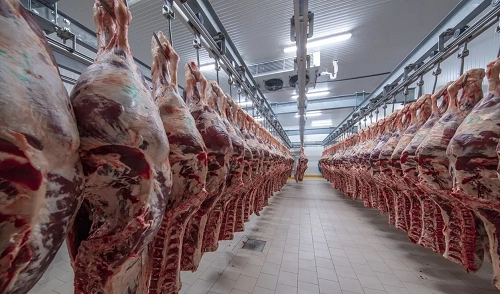
By 2026, India’s meat industry is estimated to be worth ₹4.5–4.8 trillion, covering poultry, buffalo meat, goat and sheep meat, pork, processing, cold storage, logistics, and exports. Poultry accounts for the largest share of domestic consumption, while buffalo meat dominates exports.
The industry structure is highly fragmented:
- Millions of small farmers and backyard producers
- A growing number of integrated poultry and meat companies
- Export-oriented slaughterhouses and processing units
- Limited but expanding organised retail and processing
Unlike many global markets, India’s meat sector is still largely fresh-meat oriented, with a relatively small share of processed and packaged products.
Key Growth Drivers in 2026
a. Rising Protein Awareness
Indian diets are slowly shifting toward higher protein intake. Urban consumers, younger populations, and fitness-conscious groups are increasing meat consumption, especially poultry.
Chicken is widely accepted across communities and remains the fastest-growing protein source.
b. Urbanisation and Eating-Out Culture
Growth in restaurants, QSRs, cloud kitchens, and food delivery platforms has boosted demand for meat-based dishes. Ready-to-cook and ready-to-eat meat products are also gaining traction in cities.
Convenience is becoming a major consumption driver.
c. Export Demand for Buffalo Meat
India remains one of the world’s largest exporters of buffalo meat. Competitive pricing, disease-free certification, and demand from West Asia, Southeast Asia, and Africa support export volumes.
Exports provide stability even when domestic demand slows.
d. Growth of Integrated Poultry Farming
Large poultry companies have expanded contract farming and integrated operations. This improves feed efficiency, biosecurity, and supply reliability.
Integration supports scale and cost control.
e. Cold-Chain and Processing Expansion
While still limited, cold-chain infrastructure and meat processing capacity are improving. This supports hygiene, shelf life, and export compliance.
Segment-wise Performance
1. Poultry (Chicken)
Poultry is the largest and fastest-growing segment. It benefits from affordability, short production cycles, and wide acceptance.
Processed poultry products are growing faster than fresh sales, especially in urban markets.
2. Buffalo Meat
Buffalo meat is primarily export-oriented. Domestic consumption is limited, but export volumes remain strong due to price competitiveness.
Margins are influenced by global demand and regulatory compliance.
3. Mutton (Goat and Sheep)
Mutton is consumed mainly in specific regions and communities. Prices are high due to limited supply, keeping volumes constrained.
Demand remains steady but niche.
4. Pork
Pork consumption is geographically limited to certain regions. Growth is slow and highly localised.
5. Processed and Packaged Meat
Processed meat is a small but growing segment. Sausages, nuggets, and ready-to-cook products are gaining acceptance among urban consumers.
Competitive Landscape
India’s meat industry is fragmented with pockets of integration. Large players dominate poultry integration and exports, while small operators control fresh meat retail.
Competition is shaped by:
- Cost efficiency and feed availability
- Biosecurity and disease management
- Export certifications and compliance
- Distribution and cold-chain access
Branding remains limited outside processed and packaged meat segments.
Key Challenges in 2026
1. Regulatory Complexity
Meat production and processing are subject to multiple regulations at central and state levels. Compliance costs and policy uncertainty affect investment.
2. Social and Cultural Sensitivities
Consumption patterns vary widely across regions and communities. Political and social considerations influence policy decisions and market expansion.
3. Disease and Biosecurity Risks
Outbreaks such as avian influenza pose significant risks. Disease control and prevention require constant investment.
4. Limited Processing and Cold Infrastructure
A large share of meat is sold fresh with minimal processing. This limits shelf life, export diversification, and value addition.
5. Feed Cost Volatility
Feed prices directly impact poultry economics. Volatility in maize and soybean prices affects margins across the value chain.
Structural Shifts Visible in 2026
Several long-term trends are shaping the industry:
- Gradual shift from fresh to processed meat
- Increasing dominance of poultry in protein consumption
- Growth of integrated farming models
- Rising role of exports in value stability
- Slow but steady expansion of organised retail
The industry is evolving cautiously rather than rapidly.
Forecast: Meat Industry Outlook (2026–2030)
Short-Term Outlook (2026–2027)
- Steady growth driven by poultry and exports
- Continued pressure from feed and compliance costs
- Gradual expansion of processed meat
Medium-Term Outlook (By 2030)
By 2030, India’s meat industry could reach ₹6.0–6.5 trillion in size. Growth will depend on:
- Expansion of cold-chain and processing capacity
- Stable export market access
- Better disease management systems
- Gradual normalisation of meat consumption in urban India
Value growth is expected to outpace volume growth as processing and exports expand.
Final Perspective
In 2026, India’s meat industry is growing within clear boundaries. Demand is rising, exports remain strong, and integration is improving—but social context and regulation continue to define the sector’s limits.
The future of the industry lies in efficiency, hygiene, and value addition, rather than rapid volume expansion. Companies that invest in biosecurity, processing, and compliant supply chains will be best positioned to shape the next phase of India’s meat industry.