In 2026, India’s infrastructure industry has moved from being a long-term ambition to a daily visible reality. New highways, metro lines, airports, ports, logistics parks, power corridors, and digital networks are reshaping how people move, work, and trade. Infrastructure today is not just about concrete and steel; it is about productivity, competitiveness, and economic confidence.
What defines 2026 is execution at scale. Capital allocation is strong, project pipelines are full, and private participation has increased across sectors. At the same time, land acquisition delays, funding gaps, and execution risks continue to test momentum. Growth is real, but discipline and coordination are now critical.
This article explains the size of India’s infrastructure industry in 2026, the drivers pushing expansion, the challenges slowing delivery, and how the sector is likely to evolve over the rest of the decade.
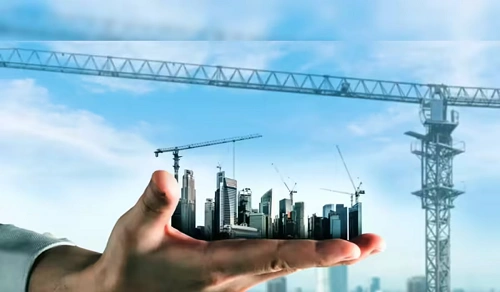
Quick Overview: Infrastructure Industry in India (2026)
| Aspect | Status |
| Total industry size | ₹95–105 trillion |
| Annual growth rate | ~8–10% |
| Share in GDP | ~30% (direct & indirect impact) |
| Major segments | Roads, railways, power, urban infra, logistics |
| Public capex focus | High |
| Private participation | Rising via PPPs |
| Key growth lever | Logistics & urban mobility |
| Industry phase | Expansion with execution pressure |
Industry Size and Structure (2026)
By 2026, India’s infrastructure industry is estimated to be worth ₹95–105 trillion, making it one of the largest infrastructure build-outs globally. The sector spans transportation (roads, railways, airports, ports), energy (power generation, transmission, renewables), urban infrastructure (metros, water, sanitation), digital infrastructure, and logistics.
Public investment continues to be the backbone of the sector. Central and state governments account for the majority of capital expenditure, while private players participate increasingly through public-private partnerships (PPPs), asset monetisation, and long-term concessions.
Large construction companies, EPC contractors, developers, financiers, and equipment suppliers form a layered ecosystem. Policy direction and coordination are led by ministries such as the Ministry of Road Transport and Highways, Ministry of Railways, and Ministry of Housing and Urban Affairs.
Growth Drivers in 2026
1. Public Capital Expenditure Push
Public capex remains the strongest driver. Budget allocations for roads, railways, metro projects, ports, and energy infrastructure have increased steadily. Infrastructure spending is seen as a multiplier for jobs, private investment, and economic growth.
Large, multi-year projects provide visibility and stability to the construction and engineering ecosystem.
2. Transportation and Logistics Modernisation
Roads and highways continue to receive the largest share of infrastructure spending. Expressways, economic corridors, and freight routes are reducing travel time and logistics costs.
Railways are undergoing modernisation through dedicated freight corridors, station redevelopment, and electrification. Ports and inland waterways are also being upgraded to handle higher cargo volumes efficiently.
Together, these investments are aimed at improving India’s logistics efficiency and global competitiveness.
3. Urbanisation and Metro Expansion
Rapid urbanisation has driven demand for metro rail systems, flyovers, water supply, sewage treatment, and affordable housing. Metro projects are operational or under construction in multiple cities, easing congestion and improving mobility.
Urban infrastructure is increasingly linked to quality of life, making it a political and economic priority.
4. Power and Renewable Energy Infrastructure
Energy infrastructure remains a core pillar. Transmission networks, substations, and grid modernisation are expanding to support rising demand. Renewable energy—especially solar and wind—continues to attract investment, supported by grid-scale storage and green corridors.
Infrastructure supporting electric mobility, such as charging networks and power distribution upgrades, is also gaining traction.
5. Private Capital and Asset Monetisation
Private participation has increased through toll-operate-transfer (TOT) models, infrastructure investment trusts (InvITs), and long-term concessions. Asset monetisation has allowed governments to recycle capital into new projects while providing stable returns to investors.
This shift is gradually reducing the funding burden on public finances.
Segment-wise Performance
a. Roads and Highways
This is the largest and most active segment. National highways, expressways, and rural roads continue to expand. Faster execution models and digital monitoring have improved project delivery, though land acquisition remains a constraint.
b. Railways
Rail infrastructure is seeing strong investment in freight corridors, rolling stock, station redevelopment, and electrification. Railways are also focusing on speed, safety, and logistics integration.
c. Urban Infrastructure
Metro rail, water supply, sewage treatment, and waste management projects are expanding across cities. Urban infrastructure is capital-intensive but essential for sustainable city growth.
d. Power and Energy Infrastructure
Power generation capacity is adequate, but transmission and distribution upgrades remain a focus. Renewable energy infrastructure is expanding rapidly, supported by storage and grid balancing investments.
e. Ports, Airports, and Logistics
Ports are being modernised to handle larger vessels and faster turnaround. Airports continue to expand capacity, while logistics parks and warehousing are growing alongside e-commerce and manufacturing.
Key Challenges in 2026
1. Land Acquisition and Clearances
Land acquisition remains one of the biggest bottlenecks. Delays in approvals, rehabilitation issues, and legal disputes slow project timelines and increase costs.
2. Funding and Financial Stress
Infrastructure projects require long-term capital. While funding availability has improved, cost overruns and delayed payments can strain balance sheets, especially for contractors.
3. Execution and Coordination Gaps
Large projects involve multiple agencies, contractors, and regulators. Lack of coordination can lead to delays, duplication, and inefficiencies.
4. Skilled Workforce Shortage
Demand for skilled engineers, project managers, and technicians is rising faster than supply. Skill gaps affect productivity and quality.
5. Sustainability and Environmental Concerns
Environmental clearances, climate resilience, and sustainable construction practices are becoming central considerations. Projects must balance speed with environmental responsibility.
Structural Shifts Defining 2026
Several long-term trends are shaping the infrastructure industry:
- Shift from build-only to operate-and-maintain models
- Greater use of digital project monitoring
- Rising role of private capital
- Focus on logistics efficiency and urban mobility
- Integration of sustainability and climate resilience
The industry is becoming more professional and outcome-focused.
Forecast: Infrastructure Industry Outlook (2026–2030)
Short-Term Outlook (2026–2027)
- Continued high public capex
- Strong activity in roads, railways, and metros
- Gradual increase in private participation
Medium-Term Outlook (By 2030)
By 2030, India’s infrastructure industry could exceed ₹150 trillion in value. Growth will depend on:
- Faster project execution
- Stable financing mechanisms
- Stronger centre–state coordination
- Sustainable construction practices
Improved infrastructure will remain central to India’s economic growth story.
Final Takeaway
In 2026, India’s infrastructure industry is no longer about catching up—it is about building ahead. The scale is massive, the intent is clear, and the impact is visible.
Success now depends on execution discipline, financing efficiency, and long-term planning. If these align, infrastructure will continue to be one of the strongest foundations of India’s growth in the years to come.