In 2026, India’s footwear industry sits at an interesting crossroads. It is both a mass-consumption sector and a rapidly premiumising lifestyle market. From everyday sandals and school shoes to sports sneakers and fashion-led casual wear, footwear has become a high-frequency purchase tied closely to income growth, urban lifestyles, and brand awareness.
What defines the industry in 2026 is scale with segmentation. Volumes remain huge, driven by India’s population and affordability-led demand. At the same time, value growth is increasingly coming from branded, sports, athleisure, and comfort-focused footwear. The sector is expanding steadily, but faces pressure from input costs, imports, and changing consumer expectations.
This article explains the size of India’s footwear industry in 2026, the forces driving growth, the challenges shaping the market, and how the industry is expected to evolve over the coming years.
Quick Overview: Footwear Industry in India (2026)
| Aspect | Status |
| Total industry size | ₹1.3–1.4 trillion |
| Annual growth rate | ~9–10% |
| Pair production | 2.6–2.8 billion pairs |
| Export value | USD 5–6 billion |
| Organised sector share | ~40% (rising) |
| Major segments | Casual, sports, formal, sandals |
| Key materials | Leather, PU, EVA, rubber |
| Industry phase | Volume-led with premium shift |
Industry Size and Structure (2026)
By 2026, India’s footwear industry is estimated to be worth ₹1.3–1.4 trillion, making it one of the largest footwear markets globally by volume. India is also among the top producers of footwear, supplying both domestic and export markets.
The industry structure is dual in nature. A large unorganised sector continues to dominate low-cost, rural, and semi-urban markets, producing basic sandals and slippers. At the same time, the organised sector—comprising branded manufacturers, retailers, and exporters—is expanding rapidly in urban and online channels.
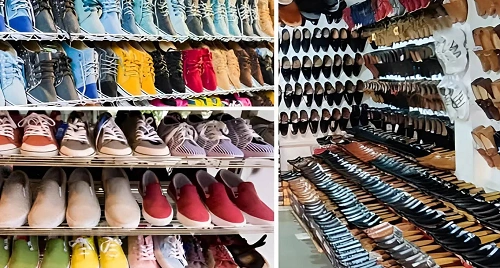
Casual footwear and sandals account for the largest share by volume, while sports and athleisure footwear contribute a growing share of value. Leather footwear remains important for exports and formal wear, but non-leather materials now dominate domestic consumption.
India’s footwear manufacturing ecosystem is concentrated in clusters across Tamil Nadu, Uttar Pradesh, Haryana, Rajasthan, and West Bengal, supporting millions of direct and indirect jobs.
Growth Drivers in 2026
1. Rising Disposable Incomes and Urbanisation
Income growth and urban lifestyles continue to push footwear demand. Consumers are buying more pairs per year, not just replacing worn-out shoes. Footwear is increasingly seen as part of everyday fashion and comfort, rather than a one-time necessity.
Urban consumers, in particular, are willing to pay more for branded, durable, and stylish footwear.
2. Shift Toward Sports and Athleisure Footwear
One of the strongest growth drivers in 2026 is the sports and athleisure segment. Fitness awareness, casual dressing trends, and work-from-anywhere lifestyles have boosted demand for sneakers, walking shoes, and performance footwear.
Both global and Indian brands are expanding aggressively in this category, making it the fastest-growing segment by value.
3. E-commerce and Omni-Channel Retail
Online retail has transformed footwear buying behaviour. Size variety, easy returns, discounts, and wide brand choice have made e-commerce a key sales channel. Many brands now operate through a mix of physical stores, online marketplaces, and direct-to-consumer platforms.
Quick delivery and flexible return policies have increased consumer confidence in buying footwear online.
4. Export Demand and Global Sourcing
India continues to be an important sourcing hub for global footwear brands. Competitive labour costs, established leather clusters, and improving compliance standards support export growth, especially to Europe and the US.
Export-oriented manufacturers benefit from scale and long-term buyer relationships, even as domestic consumption grows.
5. Government Support for Manufacturing
Policy focus on domestic manufacturing, cluster development, and export promotion has improved the operating environment. Incentives for scale, technology upgrades, and compliance have encouraged capacity expansion, particularly in organised manufacturing units.
Segment-wise Performance
a. Casual Footwear and Sandals
This is the largest segment by volume. Demand is driven by affordability and daily wear. Growth is steady but margins are thin due to intense competition and price sensitivity.
b. Sports and Athleisure Footwear
The fastest-growing segment in 2026. Consumers are prioritising comfort, cushioning, and design. This segment delivers higher margins and brand loyalty compared to basic footwear.
c. Formal Footwear
Formal shoes have seen moderate recovery. Office reopening and corporate hiring have supported demand, though growth remains slower than casual and sports categories.
d. Leather Footwear
Leather footwear remains critical for exports and premium formal wear. However, domestic demand growth is slower compared to non-leather footwear due to cost and changing preferences.
Competitive Landscape
The footwear market is highly competitive, with a mix of domestic and international players.
Indian brands such as Bata India and Relaxo Footwears continue to dominate mass and mid-market segments through scale and distribution.
Premium and sports segments see strong presence from global brands, while Indian brands are steadily improving design, comfort technology, and branding to compete more effectively.
Key Challenges in 2026
1. Raw Material and Input Cost Volatility
Prices of leather, EVA, rubber, chemicals, and packaging remain volatile. Since mass-market footwear is price-sensitive, passing on cost increases is difficult, affecting margins.
2. Import Competition
Low-cost imports, especially from East Asia, continue to pressure domestic manufacturers in certain segments. Compliance and quality differences create uneven competition.
3. Fragmented Manufacturing Base
A large part of the industry remains unorganised, limiting productivity, quality consistency, and compliance. Scaling up while maintaining affordability remains a challenge.
4. Skill and Technology Gaps
Advanced design, automation, and comfort technology adoption are still limited in many domestic units. Skill shortages affect productivity and innovation.
5. Sustainability and Compliance
Environmental standards related to leather processing, waste management, and chemical usage are tightening. Compliance increases costs but is essential for exports and long-term sustainability.
Structural Shifts Defining 2026
Several long-term changes are shaping the footwear industry:
- Move from unorganised to organised production
- Rising dominance of sports and casual footwear
- Strong growth of online-first brands
- Greater focus on comfort and design innovation
- Increasing role of exports and compliance
The industry is slowly shifting from volume-driven to value-driven growth.
Forecast: Footwear Industry Outlook (2026–2030)
Short-Term Outlook (2026–2027)
- Stable demand growth across categories
- Strong momentum in sports and athleisure footwear
- Continued expansion of organised retail and online sales
Medium-Term Outlook (By 2030)
By 2030, India’s footwear industry could exceed ₹2 trillion in size. Growth will depend on:
- Further premiumisation and brand building
- Export competitiveness and compliance
- Technology adoption in manufacturing
- Formalisation of unorganised units
Final Takeaway
In 2026, India’s footwear industry is large, resilient, and evolving. While affordability and volume remain critical, design, comfort, and brand trust are increasingly shaping consumer choices.
Companies that balance scale with innovation, control costs while improving quality, and build strong omni-channel presence will define the next phase of growth in India’s footwear market.