Cement remains one of the clearest mirrors of India’s economic momentum. Every highway built, metro line laid, house constructed, or industrial park developed translates almost directly into cement demand. By 2026, the Indian cement industry has firmly entered a scale-driven and consolidation-led phase, supported by sustained public infrastructure spending and steady housing demand.
India is the second-largest cement producer globally, and unlike many peers, its growth story is overwhelmingly domestic. What sets 2026 apart is not just demand strength, but the maturity of the industry—large national players dominate capacity, regional imbalances shape pricing, and sustainability has become a measurable financial lever rather than a branding exercise.
This article presents a complete assessment of the cement industry in India in 2026, covering size, growth drivers, challenges, and the forward outlook.
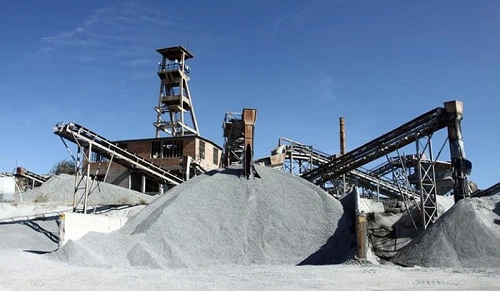
Quick Overview: Cement Industry in India (2026)
| Aspect | Status |
| Global position | Second-largest cement producer worldwide |
| Installed capacity | ~660–670 million tonnes per annum |
| Production volume | ~480–490 million tonnes |
| Demand growth | ~6.5%–7.5% in FY26 |
| Industry structure | Highly consolidated |
| Key demand drivers | Infrastructure, housing, urbanisation |
| Outlook | Strong domestic-led growth |
Industry Size and Production Landscape
By 2026, India’s installed cement capacity has crossed 660–670 MTPA, driven largely by brownfield expansions and targeted acquisitions by large producers. Actual production is estimated at 480–490 million tonnes, reflecting improved capacity utilisation following a strong post-monsoon recovery in construction activity.
Demand growth in FY26 is expected to remain in the 6.5%–7.5% range, closely aligned with the execution pace of large infrastructure projects under the $1.4 trillion National Infrastructure Pipeline (NIP). Roads, highways, metro rail, irrigation projects, and urban redevelopment continue to absorb large cement volumes.
Despite the scale, cement remains a regionally balanced industry. Transport economics limit long-distance movement, making local demand-supply dynamics more important than national averages.
Industry Structure and Consolidation
The Indian cement industry has decisively moved past fragmentation. By 2026, the top five producers control more than 60% of total capacity, creating a more disciplined and predictable competitive environment.
- UltraTech Cement remains the market leader, with a clear path toward 200 MTPA capacity by FY27, supported by pan-India presence and strong execution.
- Ambuja Cement and ACC (Adani Group) have rapidly scaled through acquisitions such as Penna Cement and Orient Cement, taking combined capacity to roughly 100–110 MTPA.
- Shree Cement, Dalmia Bharat, and JSW Cement continue focused expansion, emphasizing efficiency, blended cements, and regional dominance.
Merger and acquisition activity has shifted in nature. Instead of large pan-India deals, companies are now pursuing regional strategic acquisitions, particularly in South India, where overcapacity and fragmentation persist.
This consolidation trend has improved pricing stability, operational efficiency, and capital discipline across the sector.
Policy and Fiscal Environment
Government spending remains the strongest demand anchor for the cement industry.
- Infrastructure allocation continues at record levels, with the Ministry of Road Transport and Highways receiving around ₹2.87 lakh crore, sustaining demand for high-grade cement used in highways, expressways, and bridges.
- A potential GST rationalisation remains a key industry expectation. A reduction from the 28% slab to 18% or 12% could lower cement prices by ₹30–₹50 per 50-kg bag, significantly boosting demand in affordable housing and rural construction without materially hurting long-term margins due to higher volumes.
Policy continuity and execution, rather than new announcements, are the primary drivers of confidence in 2026.
Regional Demand and Utilisation Trends
Regional dynamics continue to define pricing power and profitability.
- North and Central India operate at high utilisation levels (75%+), driven by strong infrastructure activity in states such as Uttar Pradesh and Madhya Pradesh.
- Western India shows steady utilisation around 72%, supported by industrial corridors and urban redevelopment in Maharashtra and Gujarat.
- Eastern India faces moderate utilisation (68–70%) due to rapid capacity additions, leading to periodic supply pressure.
- Southern India remains the weakest region, with utilisation around 60–62%, making it the focal point for consolidation and rationalisation.
Cost Structure and Key Challenges
1. Energy and Fuel Costs
Cement manufacturing is energy-intensive. Coal, pet coke, electricity, and diesel prices directly impact margins. Volatility in fuel costs remains the single biggest earnings risk.
2. Logistics and Freight
Given cement’s bulk and low value-to-weight ratio, logistics efficiency is critical. Rising diesel prices and freight costs continue to pressure profitability, especially in competitive regions.
3. Environmental Pressure
Cement is among the highest carbon-emitting industries. Regulatory scrutiny and global sustainability expectations require continuous investment in emission reduction and energy efficiency.
4. Capital Intensity
Capacity expansion, technology upgrades, and sustainability investments demand large capital outlays. Balance sheet strength increasingly separates leaders from weaker players.
Sustainability and Technology Transition
By 2026, sustainability is embedded into operational strategy rather than treated as a compliance cost.
- LC3 (Limestone Calcined Clay Cement) is gaining wider acceptance, offering up to 40% lower CO₂ emissions compared to traditional cement.
- Alternative fuels are increasingly used, with leading plants achieving 15%–20% thermal substitution rates, reducing dependence on fossil fuels.
- Waste Heat Recovery systems are now standard in new capacities and supply up to 25% of total power requirements for large producers.
These measures lower long-term costs and create structural advantages for scale players.
Forecast: Cement Industry Outlook (2026–2030)
Short-Term (2026–2027)
- Strong demand visibility driven by infrastructure and housing
- Margins sensitive to fuel and freight movements
- Capacity utilisation remains healthy at a national level
Medium-Term (2028–2030)
- Continued demand growth aligned with GDP and urbanisation
- Higher penetration of blended and low-carbon cement
- Further consolidation among regional and inefficient players
Overall, the cement industry is expected to grow at a mid- to high-single-digit rate, outperforming many other heavy industries.
Strategic Takeaway
In 2026, India’s cement industry is structurally strong, consolidated, and domestically anchored. Demand is not the concern—cost control, regional dominance, and sustainability execution are.
Large players with scale, logistics integration, and green capabilities are building durable competitive moats. Smaller players face mounting pressure from costs, compliance, and regional oversupply.
The next phase of the cement cycle will reward companies that treat efficiency and decarbonisation as profit drivers, not obligations. Cement will remain central to India’s growth story—but leadership will belong to those who supply it cheaper, cleaner, and closer to the customer.