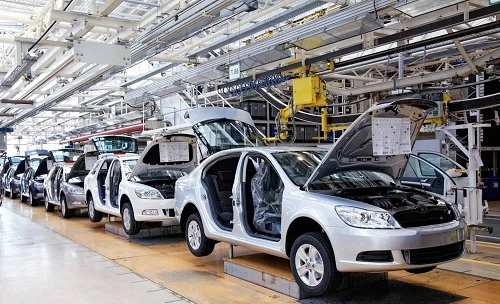
The automobile industry in India has entered a decisive phase by 2026. What was once driven mainly by entry-level cars and two-wheelers is now shaped by electrification, technology integration, regulatory shifts, and changing consumer expectations. India is no longer just a high-volume, cost-sensitive market. It is evolving into a diversified automotive ecosystem that includes electric vehicles (EVs), connected mobility, premium offerings, and export-oriented manufacturing.
As one of the largest automobile markets in the world, India’s auto sector plays a critical role in economic growth, employment, industrial output, and technological development. However, the industry is also navigating structural disruption—tight emission norms, rising costs, supply-chain realignments, and a rapid shift toward electric and alternative powertrains.
This article presents an assessment of the automobile industry in India in 2026, covering its size, growth drivers, challenges, and realistic outlook for the coming years.
Quick Overview: Automobile Industry in India
| Aspect | Status |
| Global position | Among the world’s largest auto markets by volume |
| Key segments | Two-wheelers, passenger vehicles, commercial vehicles, EVs |
| Manufacturing strength | Strong domestic and export-oriented base |
| Technology shift | Rapid move toward electrification and connectivity |
| Employment impact | Major direct and indirect job provider |
| Key pressure points | Cost inflation, transition risks, regulatory complexity |
| Outlook | Steady growth with EVs as the main accelerator |
Industry Size and Economic Importance
By 2026, the Indian automobile industry represents a multi–hundred-billion-dollar value chain when accounting for vehicle manufacturing, auto components, dealerships, logistics, and after-sales services. It contributes significantly to India’s GDP and industrial production and supports millions of jobs across manufacturing and services.
India consistently ranks among the top global producers of two-wheelers and passenger vehicles. While domestic demand remains the backbone of the industry, exports—especially of small cars, two-wheelers, and auto components—are becoming increasingly important.
The industry’s structure is broad-based, spanning:
- Two-wheelers and three-wheelers
- Passenger vehicles
- Commercial vehicles (light, medium, and heavy)
- Electric vehicles and related components
Each segment is evolving at a different pace, but together they form one of India’s most strategically important industries.
Structural Shifts Defining the Industry in 2026
1. Electrification Becomes Mainstream
By 2026, EVs are no longer experimental or niche. While internal combustion engine (ICE) vehicles still dominate volumes, electric two-wheelers, three-wheelers, and fleet-focused electric cars have gained strong traction. Electrification is now a core strategic priority, not an optional add-on.
2. Technology and Software Integration
Vehicles are increasingly software-driven. Features such as connected infotainment, advanced safety systems, telematics, and driver-assistance technologies are becoming standard even in mid-range models. This has changed the industry’s cost structure and skill requirements.
3. Shift in Consumer Preferences
Urban consumers prioritize safety, fuel efficiency, total cost of ownership, and features over sheer affordability. Ownership models are also evolving, with leasing, subscription, and shared mobility influencing demand patterns.
Key Growth Drivers in 2026
1. Rising Mobility Demand
Urbanization, infrastructure development, and rising incomes continue to support long-term vehicle demand. Even with increased public transport investment, personal mobility remains a necessity for many regions.
2. EV Policy and Incentives
Supportive policies for electric mobility—covering vehicles, batteries, and charging infrastructure—have accelerated adoption, particularly in two-wheelers and commercial fleet segments.
3. Export Expansion
India has strengthened its position as a manufacturing and export hub for small cars, two-wheelers, and auto components. Competitive cost structures and improving quality standards support export growth.
4. Auto Components and Localization
Higher localization of components, especially for EVs and electronics, is reducing import dependence and improving supply-chain resilience.
5. Infrastructure Development
Better highways, logistics corridors, and urban road networks are supporting both commercial vehicle demand and personal vehicle usage.
Major Challenges Facing the Industry
1. Cost Inflation and Margin Pressure
Stricter emission norms, safety regulations, and rising input costs (steel, electronics, batteries) have pushed up vehicle prices. Passing these costs fully to consumers is difficult, squeezing margins.
2. Transition Risk from ICE to EV
Manufacturers must simultaneously support legacy ICE platforms while investing heavily in EV development. This dual-track strategy strains capital and organizational focus.
3. Charging Infrastructure Gaps
While progress has been made, charging infrastructure remains uneven, particularly outside major cities. This limits broader EV adoption, especially for private passenger vehicles.
4. Supply-Chain Vulnerabilities
Although semiconductor shortages have eased compared to earlier years, dependence on global electronics supply chains remains a strategic risk.
5. Skill and Workforce Transition
The shift toward EVs and software-centric vehicles requires new skills. Reskilling the existing workforce and attracting new talent is an ongoing challenge.
Segment-Wise Perspective
Two-Wheelers
Still the largest segment by volume. Electric two-wheelers are growing rapidly, while ICE models face pressure from cost increases and changing urban mobility norms.
Passenger Vehicles
Growth is steady, with higher demand for SUVs and feature-rich models. EV penetration is rising but remains concentrated in urban and fleet use.
Commercial Vehicles
Highly sensitive to economic cycles and infrastructure spending. Electrification is gaining traction in last-mile delivery and urban transport.
Forecast: Automobile Industry Outlook (2026–2030)
Short-Term Outlook (2026–2027)
- Moderate overall growth driven by two-wheelers and passenger vehicles
- Strong momentum in EV two-wheelers and commercial fleet electrification
- Continued price sensitivity among consumers
Medium-Term Outlook (2028–2030)
- EVs form a significant share of new vehicle sales in select segments
- Greater consolidation among manufacturers and suppliers
- Increased export contribution to overall industry growth
Growth Expectations
The Indian automobile industry is expected to grow at a steady mid-single-digit rate, with EVs and technology-led offerings growing at a much faster pace than traditional segments.
Strategic Takeaway
In 2026, India’s automobile industry is no longer just about manufacturing vehicles—it is about managing transition. The winners will be those who balance affordability with innovation, scale with flexibility, and short-term profitability with long-term transformation.
Electrification, localization, and technology integration are not future trends; they are present realities. Companies that adapt quickly, control costs, and build resilient supply chains will shape the next decade of Indian mobility.
The road ahead is challenging, but the direction is clear. India’s automobile industry is shifting gears—from volume-led growth to value-driven, technology-enabled mobility.